

Hello! This is the PR team at CLOViZ Inc.!
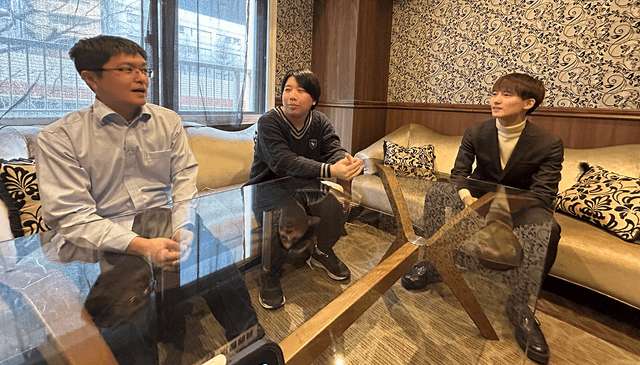
Today, we're joined by Naoya Kihara, who has been active as a professional poker player since graduating from the University of Tokyo; Kōchan, who works as a YouTuber and professional mahjong player; and Hiroshi Goto, who started his own company.
In this roundtable discussion, we'll introduce the challenges and life philosophies of these three men who deliberately chose “unconventional paths” after graduating from the University of Tokyo.
1. Why Did They Choose Unconventional Paths? — “Challenge” Over “Stability”
Goto:
—Kihara, why did you become a professional poker player?
Kihara:
To be honest, I was planning to drop out because I was barely in a position to graduate, but then I found poker, and once I could make a living from it, I was able to graduate. So it's not that I “chose not to take a normal job” — it's more that “a normal job was never an option in the first place.”
Goto:
—So how did poker lead to your graduation?
Kihara:
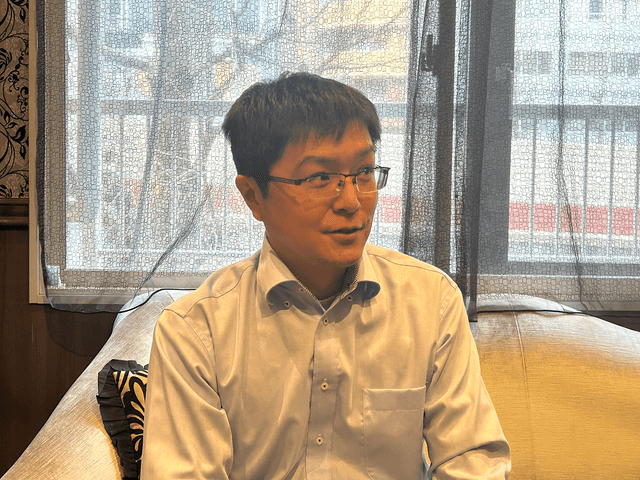
I was working as a cram-school instructor, but when I considered the working hours and the pay, going back to university was tough. People assume that “University of Tokyo students who work as private tutors or cram-school instructors earn a fortune,” but in reality that's far from true — even just earning enough to cover living expenses meant working long hours.
I'm from a science background, so I also needed time for research, and graduating while working a regular job was practically impossible. But poker made it possible. So I thought, “well, since I can, let's graduate after all,” re-enrolled, and made it through.
Goto:
—Did your family oppose you becoming a professional poker player?
Kihara:
If I had been living with my parents or relying on them financially, it might have been a different story. But I lived alone and wasn't receiving money from my parents, so there was no opposition. I always reported everything to my parents after the fact, and even if they had opposed it, I had no intention of changing course, so it was never really a problem.
Goto:
—Kōchan, why didn't you get a job?
Kōchan:
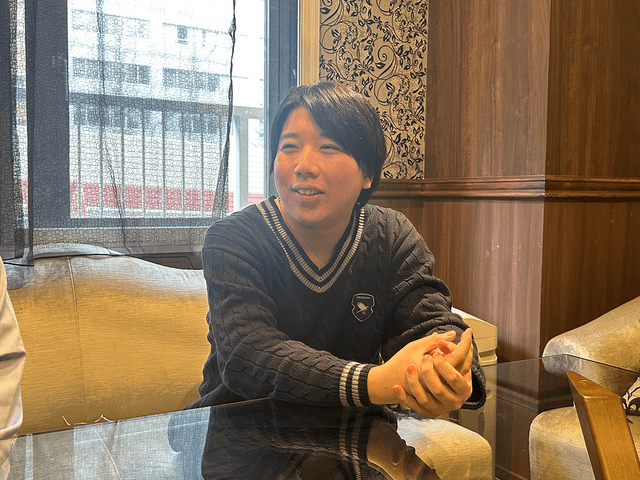
First, a quick self-introduction: after graduating from university, I worked at QuizKnock for three to four years and then went independent. About half a year later, I became a professional mahjong player, and now I do all sorts of things — making quizzes, appearing on TV, playing mahjong.
In contrast to Kihara, I graduated from university right on schedule. Along the way, I also got a teaching license for junior high and high school, and until around my third year of university, I planned to “become a teacher.” I was thinking of applying to private high schools in Tokyo. I've always liked teaching people things, so that was the kind of job I wanted to do.
But around that time, QuizKnock started getting popular, and I found myself thinking, “since I have the chance, let's work here for a while.” Though if I ever feel like being a teacher again, I might think about it then.
Kihara said he told his parents after the fact, and I'm the same. We get along well and talk about all kinds of things, but when it came to my path and career, everything was reported after the fact. My parents did tell me “why don't you work at a big company?” but I just brushed it off (laughs). They made suggestions, but they never forced me.
Kōchan:
—Goto, why didn't you get a job?
Goto:
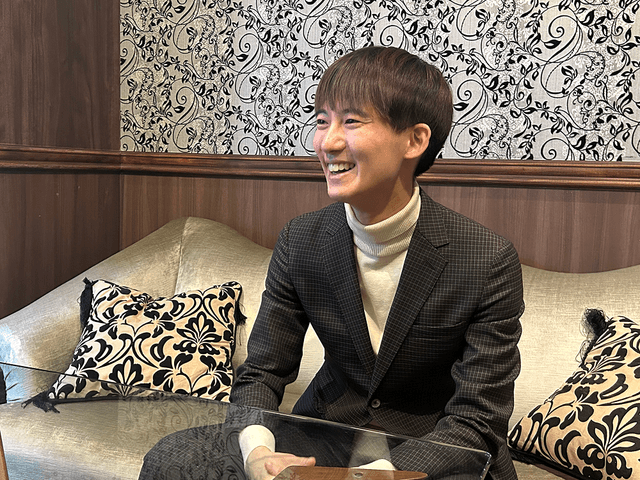
First, a quick self-introduction: while I was in university, I appeared on the quiz show Todai King for about three and a half years. Then, since last year, I've been running a company whose main business is private tutoring services. I've also joined CLOViZ, the company that develops POKER Q’z, as a director.
The reason I started a company is that a life with more variance felt more appealing to me than joining a big company and living a stable life.
Also, my father has been telling me since I was in junior high school to “take risks while you're young.” It seems he thought, “once you have a family, it becomes harder to take risks, so it's better to do it while you're young.”
My mother is more on the conservative side and would say, “after all, wouldn't a big company be better?” But in the end, she respected my choice.
I live with my parents, and they even provide my housing, but they never forced anything on me, which I'm very grateful for. In return, I want to take risks and take on challenges now, and if I succeed, repay them properly.
2. What Are the Benefits of Working at a Big Company? — Work at a Scale You Can't Achieve as an Individual
Goto:
—What do you think are the benefits of working at a big company?
Kihara:
The biggest benefit is being able to move business at a scale of tens of billions of yen. It's hard for an individual to run a business at that scale, and getting it to that point is a huge undertaking, too. At a big company, even if you generate profit, a portion of it is taken by the company as salary, but even so, being able to drive large-scale business is appealing.
3. The Real Downsides of Being a Professional Poker or Mahjong Player — “No Credibility” and “Unstable Income”
Goto:
—With a way of working like ours, social credibility is low, and it can also be hard to borrow money. Have you felt that downside?
Kihara:
Very much so. The rental guarantor company for where I live now wouldn't pass my application, so the lease is under my wife's name. At my previous place, I passed under my own name, but when we moved, the guarantor company changed, and I didn't pass this time. That said, I did get approved for a housing loan even as a professional poker player (laughs).
Goto:
Are there other downsides you feel because you chose paths like professional poker, professional mahjong, or media appearances?
Kōchan:
My income varies from month to month, so there are times when I feel, “this month is going to be a little tough.” I don't think it's completely unstable, but a fixed salary isn't guaranteed, so I do see it as a downside.
Kihara:
In my case, some months my balance goes negative — never mind money coming in. There are declines in stock prices, and in poker, too, there are times when I'm down overall for several months. Losing money while working is different from a normal job, right? But once you can win to a certain degree, the hourly rate over the long term really is high.
However, as the overall level of players worldwide keeps rising, as I get older my ability declines and the speed at which I improve slows down. If that happens, I could find myself unable to make a living once I can no longer keep up. That's the biggest downside.
Goto:
—You've been doing investing seriously for the past two or three years, right? Is there also a sense of preparing for the future in that?
Kihara:
Not at all. It's just the feeling of playing with it as an interesting game.
4. Being Strong Alone Isn't Enough to Make a Living? — What You Need to Live as a Professional
Goto:
—What do you think about working as a professional mahjong player and appearing on shows? I think a lot of people are interested, but I also imagine many hesitate because of the uncertainty about the future.
Kihara:
Basically, I think being a professional mahjong player is closer to a “qualification” than a “job.” It's like a hobby circle of sorts, with a cutoff that you can't get into unless you have a certain level of skill. If you reach the top tier, it can become a job, but for most people, being a professional mahjong player isn't a “job.”
In that sense, it's a world where you can chase your dreams, but making a living in reality isn't easy.
Kōchan:
That's right. Living as a professional mahjong player isn't just a matter of “being strong enough” — each person has to think about what form their activities will take.
Professional shogi and Go players have it so that devoting yourself to the game is itself the path to making a living: win, and your income increases, and the competition itself stands as a profession. But with mahjong, at the level of “I can win a reasonable amount,” it's hard to live on that alone. That's why how you brand yourself becomes important.
That said, recently the value of teaching mahjong has been rising, pay has gone up, and I think the barrier has come down.
Goto:
It's the same with entrepreneurship. In the old days, it was an era of “you need 10 million yen in capital” and “if you run your company into the ground, people will point fingers at you for the rest of your life.” But now those barriers have come down quite a bit.
Capital requirements have been relaxed, and the idea that you can try again even if you fail at starting a business has spread. In fact, there are more and more cases where the experience of failing at a startup is highly valued by other companies.
The world of professional mahjong and poker is the same — compared to the past, the environment keeps changing. I think we've entered an era where it's easier to take on the things you want to do.
Kōchan:
In the past, people who lived freely like us tended to be looked at coldly as “unstable people,” but recently I think the tide has shifted to “this is a valid way to live, too.”
At the same time, the value of getting a job at a decent company is relatively declining, and I feel the idea that “there's risk in getting a job, too” is spreading. Maybe we've reached an era where there's no longer any “choose this path and you'll definitely be safe.”
5. Advice for People Aiming to Be Poker Pros, Mahjong Pros, or Entrepreneurs — “If You're Hesitating, Should You Give Up? Or Just Start Moving?”
Goto:
—Finally, do you have any advice for people who want to become professional poker players like Kihara but are hesitating, or people who want to do professional mahjong or media-type work but can't take that first step?
Kihara:
Honestly, I think that if you're hesitating, you should give up.
I've said that poker is “something one in a thousand can make a living from,” but just because you can make a living now doesn't mean it will last forever. Even if you can make a living at 25, you also need to be able to make a living when you're 50 or 60. To do that, you need to build up both your skills and your savings.
When you think about it that way, I think you need to at least be at a level that puts you in the “one in ten thousand.” The world of one in ten thousand isn't something you reach through mere effort. People who do it thinking “I have to work hard” basically aren't suited for it. I think that if you're conscious of working hard, you're already done for, more or less. So if you're hesitating, it might be better to give up.
Kōchan:
As a professional mahjong player, I'd be really happy if the mahjong population grows, so I want everyone to give it a try.
But when it comes to “making a living from it,” that's a different story. I think the confidence at the root of each person's way of life is what matters.
For example, even if I were to stop appearing in media entirely and quit my work as a professional mahjong player from here on, I have the confidence that “I can still live.” That's because of the things I've studied and the experiences I've accumulated so far.
So rather than asking “can I make a living doing this?” — if you have the confidence that “I can survive no matter what situation I'm in,” then I think it's fine to give it a try.
For example, I have a teaching license, so if worst comes to worst, I have the path of working as a teacher. Skills and strengths like that connect to confidence. Even when people ask me for advice, I can't guarantee “you'll definitely be fine.” So I think it's important to have a dialogue with yourself and decide.
That said, I genuinely enjoy being in this world, and if I hadn't become a professional mahjong player, I don't think I would have met Goto or Kihara. Because I happened to choose this path, there are people I was able to meet. I feel like I'm living a really good life because of that. So I think giving it a try is a valid option.
Goto:
As for entrepreneurship, as I said earlier, it's become an environment where it's easier to take risks than in the past. So if you're hesitating, I think it's good to try it at least once, while you're as young as possible.
Even if you fail, you can start over, and if you think “I guess I'm not cut out for it,” there's also the option of getting a job at a company. And more companies are coming to highly value the experience of failing at a startup, so you can use that to work, too.
Personally, I'm now working almost seven days a week, and it feels like all my free time goes to work, but I'm still enjoying it. I really am glad I did it.
So if you're hesitating, I think it's good to just start moving on the day the idea strikes you.