
What’s Your Personality? Rediscover Yourself Through Your Poker Playing Style
Introduction
When you hear “poker,” what comes to mind? Gentlemen in tuxedos dealing cards with expressionless, mask-like faces? Or players in a corner of a casino, stacking chips under dazzling lights in a cloud of excitement? Poker certainly has a glamorous image—but at its core, it’s a deeply human game where psychology and strategy are packed into a deceptively simple format.
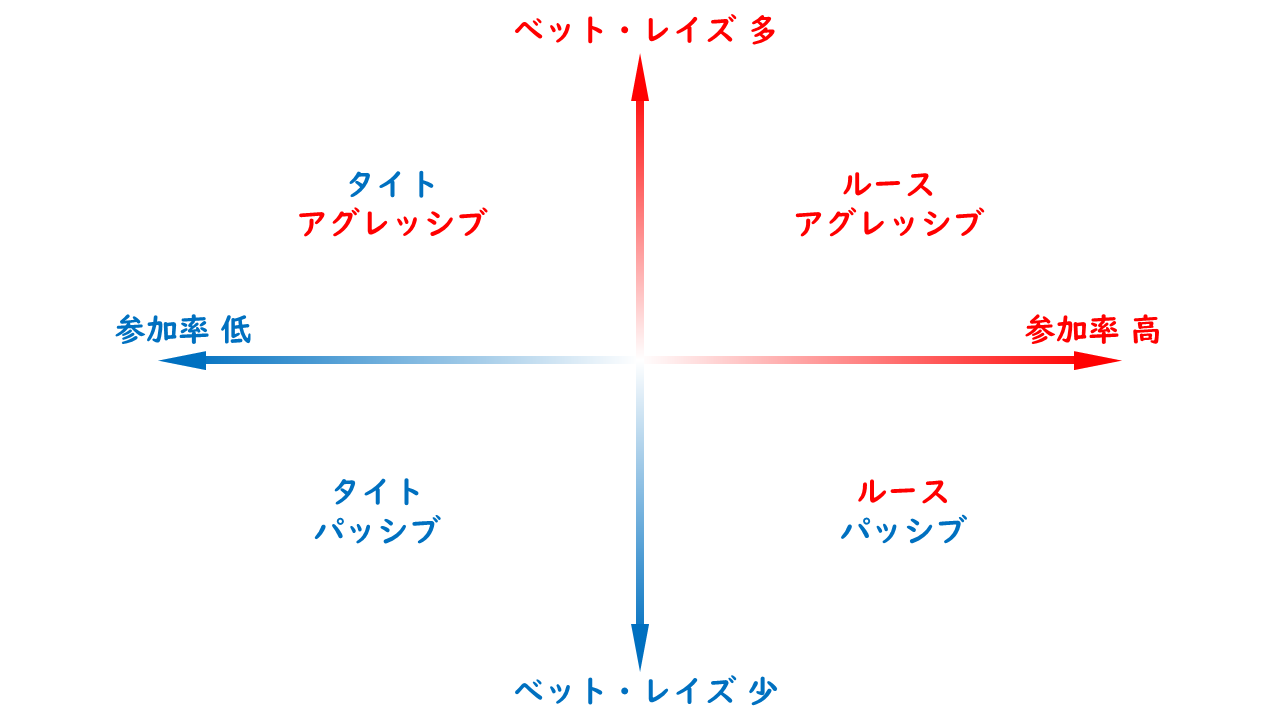
In poker, these four terms are commonly used to describe player tendencies.
- Loose
- Plays a lot of hands
- Tight
- Plays a narrow, selective range
- Aggressive
- Bets and raises often; applies pressure
- Passive
- Checks and calls often; avoids taking the lead
By combining them, most poker play styles fall into four broad categories:
- Loose Aggressive
- Loose Passive
- Tight Aggressive
- Tight Passive
Interestingly, these four categories don’t just describe how someone plays poker—they can also reflect personality and behavior patterns.
In this article, we’ll treat these four styles as “personality types” and use poker as a lens to reflect on yourself. Which type sounds most like you?
1. Loose Aggressive (LAG)
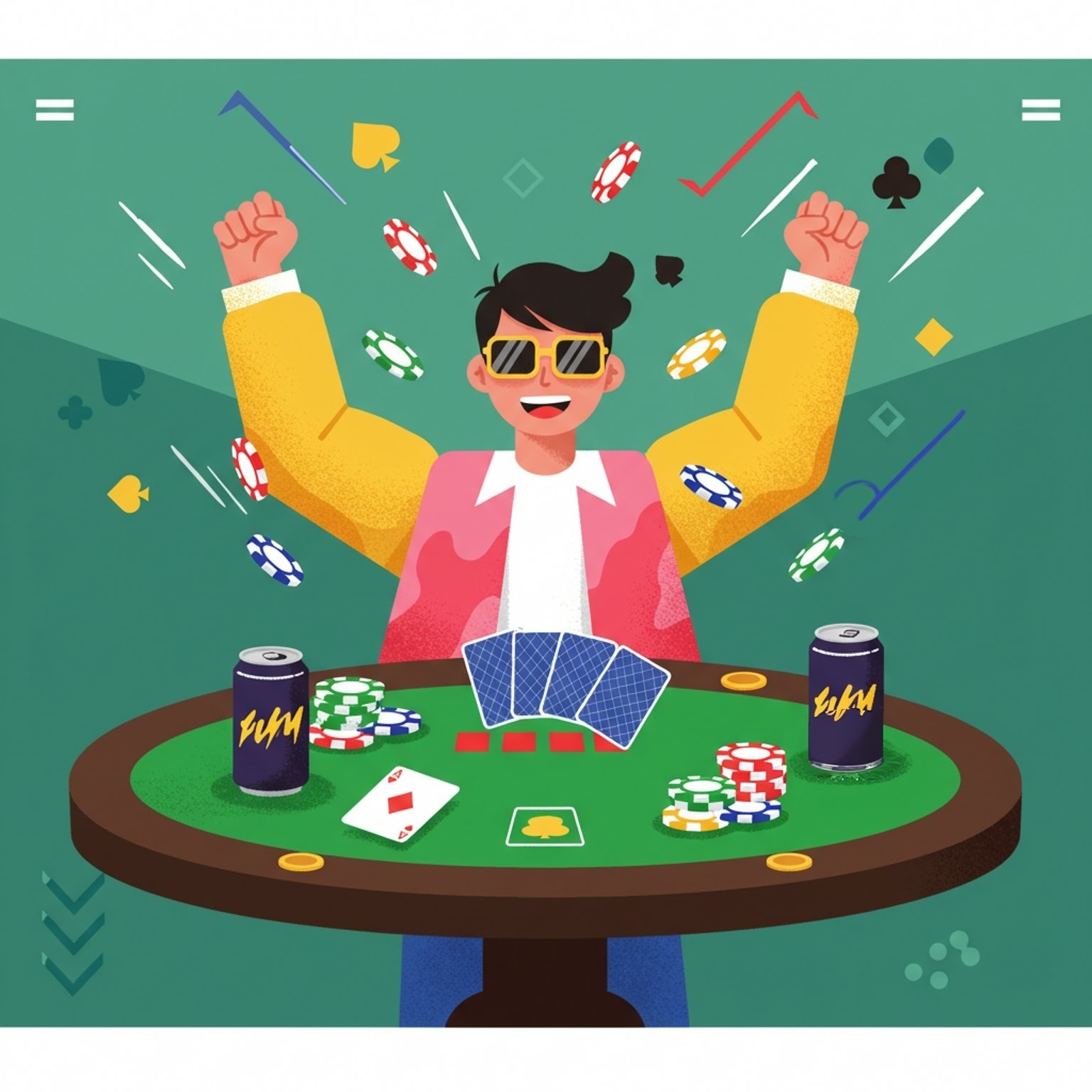
The life-of-the-party type
Loose Aggressive, often called LAG, is the type that plays frequently (loose) and also fires bets and raises aggressively (aggressive). In poker, a LAG jumps into pots with a wide range and looks for chances to build stacks by applying constant pressure. For opponents, this style is hard to read and exhausting to play against.
In everyday life, this is the person who shows up to parties, meetups, and events, talks to strangers without hesitation, and keeps the energy high. You’re a natural mood-maker—but people might also say you “cast too wide a net” and make it hard to tell what you really want. Whether at the table or in real life, your biggest strengths are action and boldness.
2. Loose Passive
.jpg)
The “nice person” who can’t say no
This type also has a high participation rate (loose), but rarely takes proactive action (passive). In poker, you call because you want to see flops and stay involved, but you don’t often bet or raise to take control. As a result, you can end up letting opponents dictate the action and getting dragged into unprofitable pots.
In daily life, you tend to say “Sure!” when invited, but you rarely make the plan yourself or push your own suggestions. When a group can’t decide where to go, you’re the one saying, “I’m good with whatever” or “I’ll follow you.” Before you know it, you may get swept along and stuck with the short end of the stick. Still, your warmth and adaptability help you fit in easily—and that’s a real strength.
3. Tight Aggressive (TAG)
.jpg)
The planner who picks spots and attacks
Tight Aggressive, known as TAG, selects hands carefully (tight) and then raises hard when it’s time to compete (aggressive). This is one of the most fundamental and reliable poker styles, and many strong players prefer it. You move when it matters, avoid waste, and aim for efficient results.
Personality-wise, you don’t show up to every casual gathering—but you do choose the right business event or hobby meetup, and when you go, you make it count. You may also be careful with money: you think, “Do I really need this?” and then buy something high-quality when it’s worth it. Rational, efficient, and focused on making the best decision to succeed, you tend to build solid results over time.
4. Tight Passive
.jpg)
The cautious, safety-first type who often misses value
Last is Tight Passive. You enter pots only with carefully chosen hands (tight), but you don’t apply pressure (passive). In poker, even when you pick up a strong hand, you often check and call instead of betting and raising. Opponents may think, “What are they doing?” because your line can be hard to interpret. But you also miss chances to grow the pot, and you may end up winning less than you could.
In everyday life, you keep your social circle small, and even when someone invites you out, you might go reluctantly. You avoid conflict, don’t push your opinions, and prioritize staying out of trouble. That caution can protect you—but if you share your ideas and strengths a little more, you might catch opportunities you didn’t expect. Playing it safe feels comfortable, but one brave step at the right moment can expand your world.
Your play style shouldn’t be fixed, but what about your personality?
Professional poker players change styles based on the situation and adjust to their opponents. The same idea applies to many parts of life. You don’t need to think, “I’m naturally loose passive, so that’s just who I am,” or “I have to stay tight aggressive forever.” Flexibility is what creates better outcomes.
In poker, people often say it’s best to start with Tight Aggressive. It reduces mistakes and makes it easier to build confidence through early success. But once you gain experience, you also need to open up your range little by little, or take a more passive line depending on how opponents play. Life works the same way: when you stop clinging to fixed assumptions and shift your position based on your environment and relationships, you start seeing new possibilities.
Conclusion: Are poker and life similar?
The four poker play styles can sometimes act like a mirror that reflects personality. Loose Aggressive players energize the room. Loose Passive players are kind and easily influenced. Tight Aggressive players are strategic and rational. Tight Passive players are cautious and safety-oriented. Which one feels closest to you?
In poker, the strongest players are the ones who can adapt their strategy to the table and their opponents. In life, too, you get better results when you avoid rigid thinking, break out of your shell when needed, or sometimes go with the flow. A multi-angle approach often works best.
So the next time you pick up cards—or step into a new relationship or business opportunity—what “style” will your personality choose? Use these four poker play styles as a hint for your next move. It might be the spark that makes your life a little richer and a lot more interesting.
Learn Poker Like a Pro!
Download POKER Q'z – AI-Powered Poker Learning App ↓
Start learning on your favorite platform!


Follow Us
Follow us for poker quizzes, tips, and strategies!


Company Info
Company: CLOViZ Inc.
Location: Setagaya, Tokyo, Japan
Founded: May 7, 2024
CEO: Sotaro Masaki
URL: https://cloviz.co.jp