
Introduction
In recent years, poker has been steadily growing in popularity in Japan. With more chances to watch glamorous international tournament scenes on TV and YouTube, plenty of people are thinking, “I want to try that too!” On top of that, amusement casinos and poker spots are rapidly increasing, especially in Tokyo. Many players start with online poker as their entry point and then think about taking on live, face-to-face play next.
But when it actually comes time to visit a brick-and-mortar amusement venue, doubts start to creep in: “Is there special etiquette?” “I don't know how chips and actions work.” “Will I stand out as a beginner…?” In this article, we'll walk you through the basic manners, rules, and a few useful tips to know before your live poker debut. Once you have these down, your first visit to an amusement venue should be far more enjoyable.
1. Understand the Differences Between Online and Live Poker
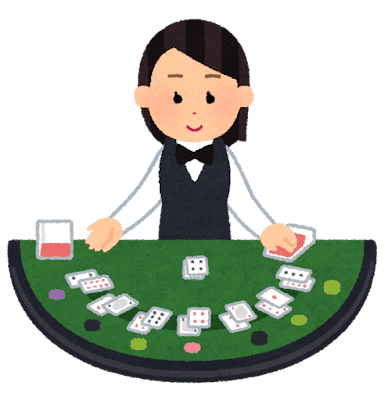
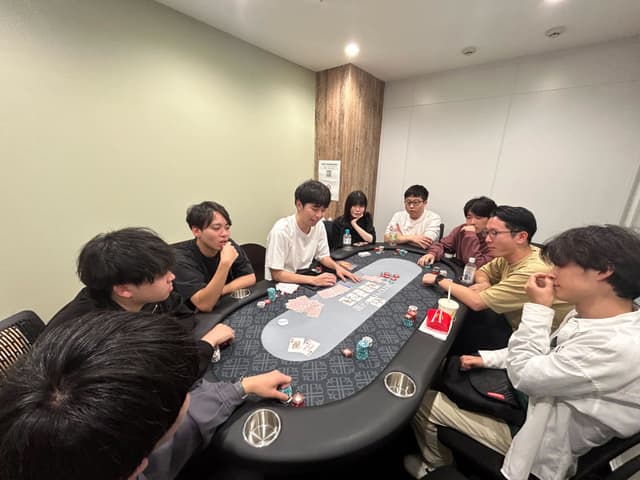
In online poker, the software or app automatically handles chip counting and determining the winner. In live play, however, the dealer physically deals the cards and players handle their own chips. Even if you're used to online poker, that hands-on feel can throw you off when you first go live.
For example, chips are color-coded by denomination, but you're the one who counts them out and puts them into the pot. And while you could call or raise with a single click online, live play requires physical actions — putting actual chips into the pot and clearly signaling your move. Understanding these differences will make your first live experience go much more smoothly.
2. Basic Etiquette: Making Clear Actions and Handling Chips
■ Make your actions known verbally or with clear signals
In poker, it's important to clearly indicate your action — call, raise, fold, and so on. Vague hand gestures, mumbling, or hesitating and tapping the table can confuse everyone around you.
If you're a beginner, it's safest to say your action out loud without hesitation: “,” “ XX points,” or “.” This makes it much harder for the dealer and other players to misunderstand your intentions and helps you avoid trouble.
■ Watch out for the one-chip rule
A rule that trips up many beginners is the “one-chip call.” When there's already a bet in front of you and you toss out a single high-denomination chip, it's treated as a call, not a raise.
For example, if the call is 500 points and you put out a single 5,000-point chip, your action is locked in as a call. If you actually want to raise, say “Raise!” before pushing out the 5,000-point chip, or make your intention unmistakable by combining that chip with additional chips.
■ Keep your chips visible to everyone
Place your higher-denomination chips in front so that the other players can see your whole stack. If a hidden high-value chip is discovered later, it can throw off the strategy and flow of the game and make opponents suspicious. A fair game depends on everyone being able to clearly see each other's stacks.
3. Make Actions Like Folding and Checking Clear
■ Fold by pushing your cards forward
When you fold, say “Fold” or push your cards toward the center of the table and let go. If you sit there holding your cards and thinking for too long, opponents may mistake you for having already acted. Even without a word, letting go of your cards clearly signals that you're folding.
■ by tapping the table lightly
You can say “Check” out loud, but once you're used to the game, tapping the table lightly with your fingers is the standard signal. Just be careful not to make confusing motions, like unconsciously folding your hands or shifting your body. When in doubt, saying “Check” is the surest way.
4. Live-Only Mishaps and How to Handle Them
■ Beware of acting out of turn
If you blurt out a fold or call before your turn, it can influence other players' strategy. Acting out of turn is frowned upon and undermines the fairness of the game. Always wait until your turn before taking any action.
■ When an opponent accidentally acts
For example, if an opponent accidentally declares a call too early, that declaration may be more or less “locked in.” However, the exact interpretation depends on the rules and each venue's policy, and the floor manager has the final say. As a player, knowing the rules lets you act in a way that doesn't put you at a disadvantage. If you're unsure about anything, don't hesitate to ask the dealer or staff. Everyone was a beginner once, and the staff will gladly teach anyone who's new to the game.
5. Handling Your Cards and the Showdown
■ Keep your cards visible only to yourself
Be careful not to lift your cards high or let anyone around you see them. Looking at your cards as smoothly as a pro takes practice, but at first it's fine to peek at them slowly and carefully, close to you.
■ Show both cards at the showdown
When you open your hand at the end, always lay both cards face-up side by side on the table. Flipping them over one at a time can confuse your opponents. By clearly showing “this is my hand,” you make it easy for the winner to be determined.
6. Communicating with Staff and Other Players
At a poker spot you're visiting for the first time, asking the staff about anything you don't understand is the fastest way to learn. If there's a rule you're unsure about, don't hold back — just ask.
You might also try enjoying friendly conversation with the other players. The poker table is a place of competition, but it's also a social one. Of course, you don't need to force a conversation, but even a simple greeting or saying “nice to meet you” can lighten the mood and ease your nerves.
Summary
Live poker has a unique atmosphere you won't find online. ling real chips and making your moves under the gaze of the table can feel nerve-wracking at first. But don't worry — everyone starts out as a beginner. Once you have the basic rules and etiquette down, you'll gradually find it easier to focus on the game and play with more confidence.
Making your poker debut at an amusement venue is the first step into a whole new world. Learn the rules and etiquette, and enjoy the unique pleasure of live poker, where you face your opponents in person. Once you're playing smoothly, you'll be able to sit down at the table and enjoy the challenge with confidence from your next visit on.