
Hello! We're the PR team at CLOViZ Inc.!
Many of you are probably wondering what CLOViZ is all about and what kind of people work here. In this note, we'll introduce the members of CLOViZ through a series of interviews. We'll touch on CLOViZ's vision and values, as well as each member's role and skill set, while showcasing the strength of the team as a whole and what makes each person unique.
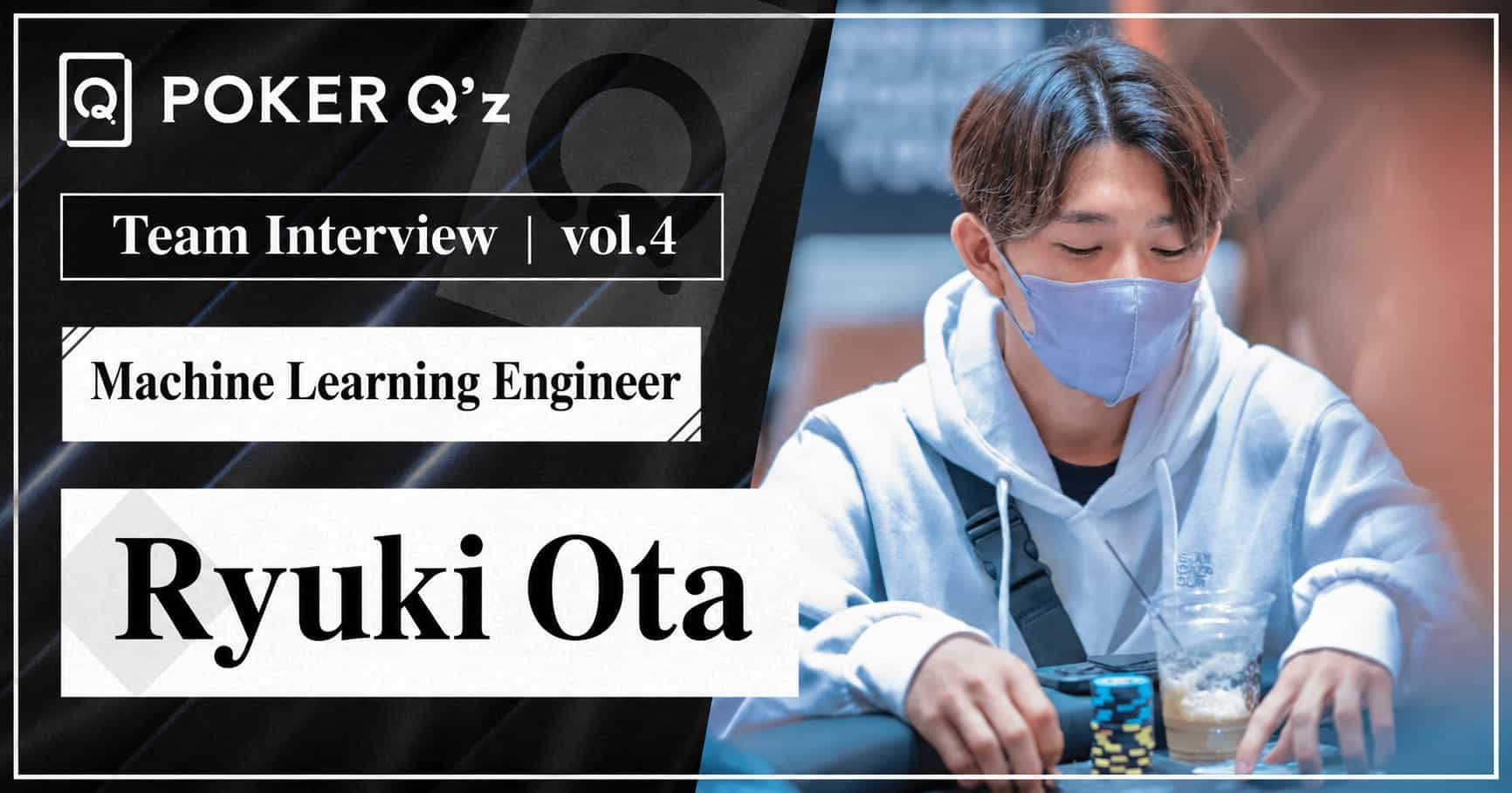
For the fourth installment, we're featuring Ota, who is involved in content creation!
1. Armed with Probability Theory: A Graduate Student's Journey into the World of Poker
——First, could you tell us a little about yourself, Ota?
I'm Ryuki Ota, a graduate student at the Graduate School of Science and Engineering, Hosei University. At university, I research mathematical finance and machine learning. More specifically, I work in areas close to poker, such as finance and probability theory.
I've been playing poker for four years and have played a wide variety of games. I first got into it as a college freshman, starting with casual Texas Hold'em games among friends. Later, I began attending Pot-Limit Omaha seminars at an amusement casino in Tokyo, and I quickly fell completely in love with the game, spending a long stretch immersed in it. The instructor was truly wonderful, and he taught me the fundamentals. In my third year, the same venue's seminars gave me the chance to learn mixed games like Deuce-to-Seven and Badugi, and I became especially hooked on 2-7 and Badugi. In my fourth year, influenced by a friend, I shifted my studies toward tournaments. More recently, I've come back to my roots and returned to Texas Hold'em ring games, focusing on GTO strategy research.
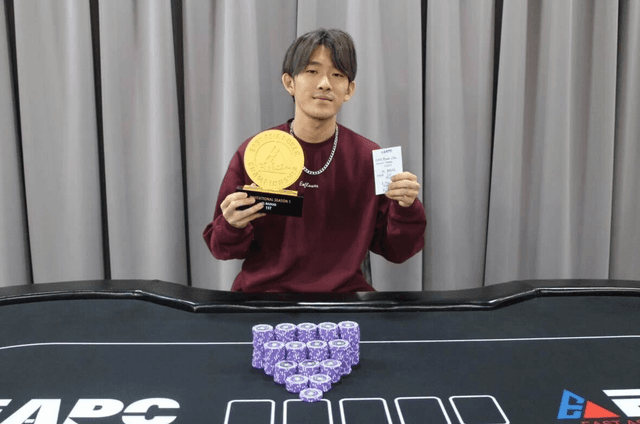
As for results, I've finished 16th in the JOPT main event, placed runner-up twice in side events, and won a Badugi tournament in South Korea.
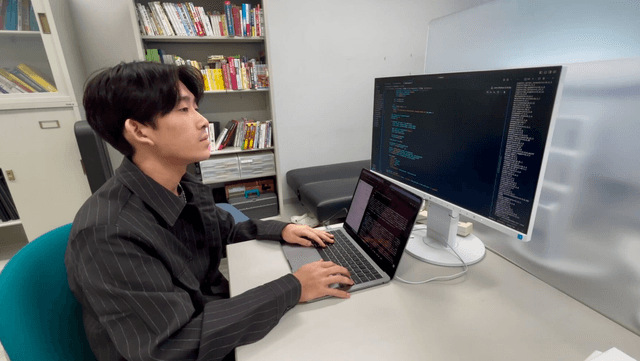
At CLOViZ, I'm responsible for content creation for the poker learning app POKER Q'z—such as deciding what kind of problems to include—along with creating seminar content, designing curricula, and making slides.
2. Flexible Strategy Development Beyond GTO
——So you've experienced a wide range of games! What do you focus on in your play style?
It's a basic point, but from an exploitative standpoint, rather than looking for tells, I try to observe my opponents' play and exploit the spots where they seem to deviate from GTO.
In tournaments especially, ranges change according to the situation, so opponents' opening hands and the hands they should fold often differ from GTO. In those spots where the strategy should diverge from GTO, I adapt flexibly and choose actions tailored to the opponent.
Specifically, the ranges you get all-in with and your actions in spots where the bubble factor—so distinctive of tournaments—is high should change depending on the opponent. I believe these preflop decisions are the most important point in tournaments.
3. The Depth of Player-versus-Player Games: The Appeal of Psychological Battles and Connection
——So there's a play style unique to tournaments! What do you find most appealing about poker, Ota?
First, I'm drawn to the psychological element.
I've always loved player-versus-player games with a psychological dimension, and poker fits that description perfectly, so I naturally came to love it.
Beyond the gameplay, I love the fact that it lets me meet people I'd never normally encounter. The connections you make are a huge part of the appeal.
In college, unless you belong to an inter-university circle, there aren't many opportunities to interact with students from other schools, but poker gave me those connections. Also, everyday campus life gives you limited contact with older people, but through poker I've gotten to know people about a dozen years older than me, and hearing stories from those with working experience was incredibly refreshing.
4. The World of Poker Beyond Borders: Lessons and Memories from the APT
——The psychological maneuvering really is deep. Looking back on your poker career, is there something you're glad you did, or an experience that stands out in your memory?
When I took part in the APT (Asian Poker Tour), held on Jeju Island in South Korea, I was glad I had experience with games beyond Texas Hold'em. The APT in particular offers a lot of mixed games, with the added benefit that buy-ins are relatively affordable and easy to enter. I also discovered that playing mixed games in cash games naturally led to conversations with international players, and that you can have a genuinely great time that way. Texas Hold'em is the mainstream in live poker, but tournaments offer plenty of chances to enjoy mixed games, and overseas, players can even play mixed games in cash games if everyone at the table agrees.
The experience that stands out most is playing in a Badugi tournament. I made it all the way to heads-up and found myself cornered into a forced all-in, but a run of good luck from there carried me to the win. I think that perfectly captures what makes poker fun. Skill is certainly necessary, of course, but the possibility that luck can give you a chance to beat stronger players is a charm unique to poker.
5. POKER Q'z's Mission to Support Beginners, and the Challenges Facing the Industry
——There's a saying that luck is part of skill! What challenges do you see in the poker industry?
First, I think a major challenge is that beginners don't know which information to rely on. Even though many people are sharing accurate information, the reality is that it's hard for someone new to poker to find it. That's why I want to build an environment with POKER Q'z where even beginners can learn.
POKER Q'z is designed so players can learn in a structured order according to their level.
Its strength is a feature that judges whether your action is correct from a GTO standpoint and explains the reasoning behind it. By solving similar problems over and over, reading the explanations for your mistakes, and improving from there, you can expect to get better in a short period.
We're also focusing on building a community, not just a learning app, aiming for an environment where users can play together and teach each other.
Another challenge is that you can't play cash games in Japan.
There are legal restrictions, so it's unavoidable to some extent, but with the current amusement format, tournament entry fees are structured as a courtesy fee rather than a genuine buy-in, and some beginners don't understand that. From the standpoint of giving back to players, motivating them, and making the scene more exciting, I hope regulations in Japan will gradually ease in the future so that cash games and prize tournaments on the same scale as those overseas can be held.
——Ota, thank you very much for the interview today!
Thank you as well! If you're interested in what we're doing and would like to be involved in developing the service together, please don't hesitate to reach out to us through the link below!