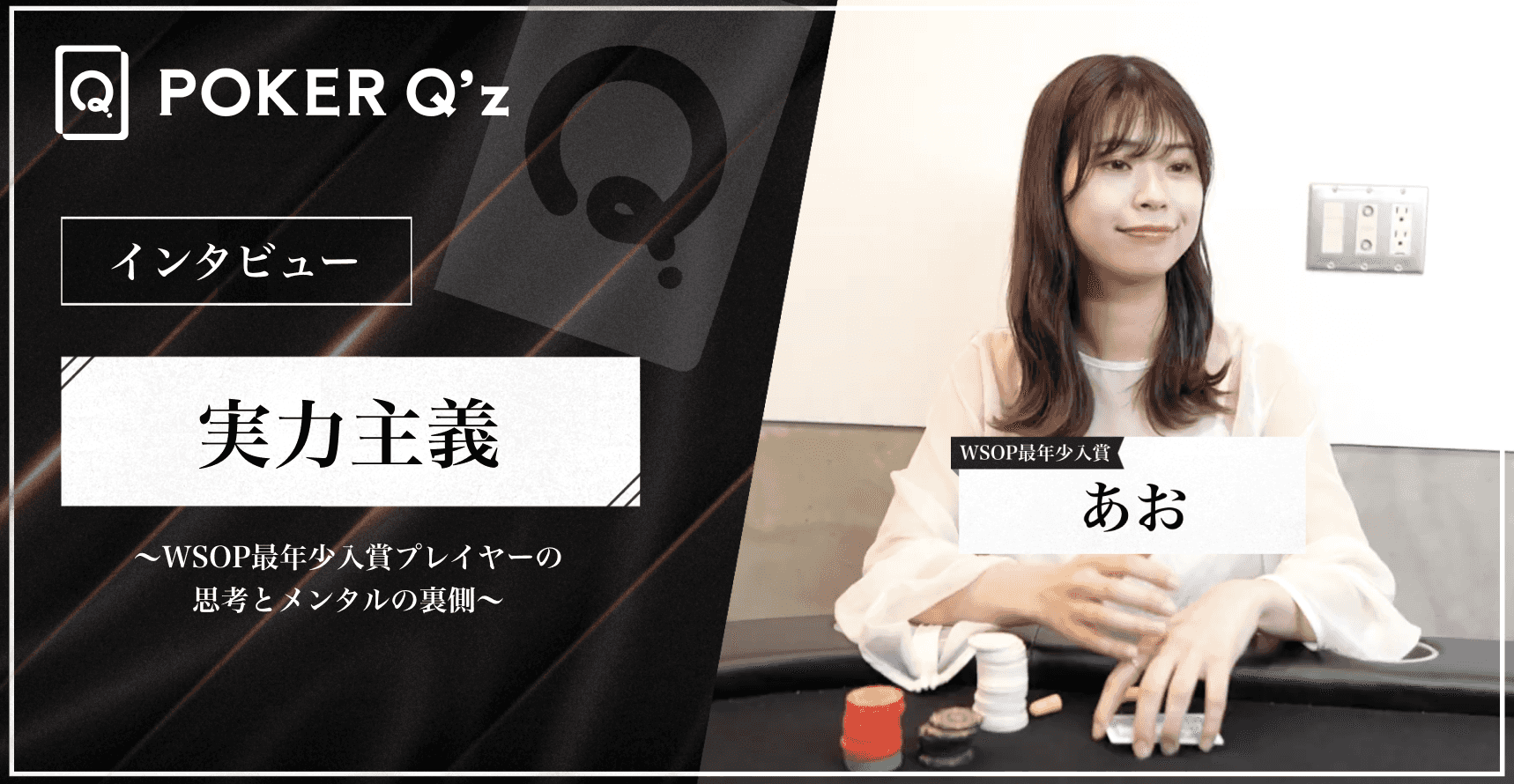
Hello! We're the PR team at CLOViZ Inc.!
Today, we're joined by Ao, a female poker player who's active in overseas tournaments and also puts serious effort into poker-related influencer activities!
She told us all about why she chose poker as her career, how she studies off the felt, and the pure, unguarded love of poker behind her calm, collected thinking!
1. A female player who chose what she loves as her career
— First, could you introduce yourself?
Ao:
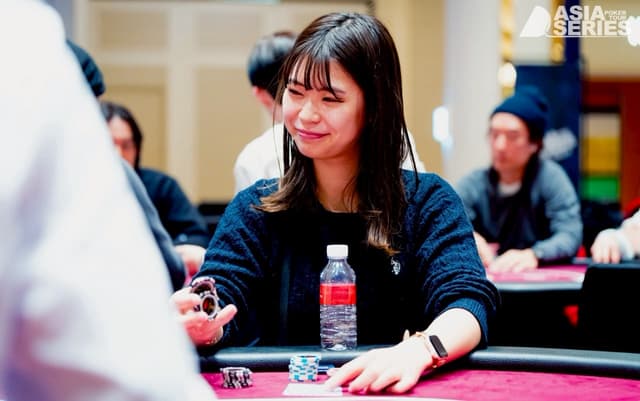
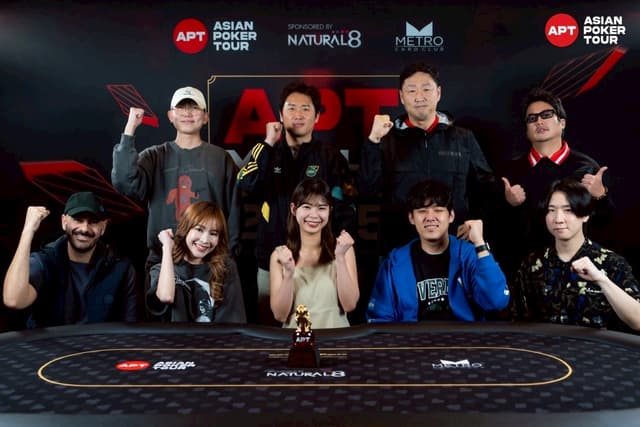
My name is Ao. I'm 24 years old and work as a web freelancer. I've been playing poker for about three and a half years. I got into it by chance when a friend introduced me to it, and now I play in a lot of tournaments both in Japan and overseas. As for my main results, I won a daily tournament at Caesars Palace during last year's WSOP, and I was runner-up at APT Manila.
— Can you tell us more about what got you started with poker?
Ao:
Honestly, a friend happened to take me to an amusement poker room. I'd always been the type to love board games, werewolf, and games like that, so I thought, "Well, maybe poker will be fun too," and went along. I wasn't that into it during ring games, but the second time or so I went, I entered a tournament on a whim and I won a ton. It was only a tournament of about 30 players, but I made it to runner-up, and I got it into my head that I was good at poker. I was having so much fun that I got completely hooked.
— Next, you're doing influencer activities now, but what was the turning point that raised your profile?
Ao:
I think it was ABEMA's Queen of Poker.
— I see — I watched it too, haha. How did you feel back then?
Ao:
It's tied to the web work I was doing. I've been doing freelance web work since I was about 19, and it's now my fourth year since I incorporated. For a while I was running it on a fairly large scale, but I started to feel something like emptiness. I'd started completely on my own with no goal, so the business was probably going well — but I'd started thinking, "What's ahead of me, really?" At the time, poker was purely a hobby, but I decided to change how I thought about work: I wanted to make what I love my job. And once I thought that way, I wanted to make poker my job.
When I thought about what I could do to make poker my career, playing cash games as a pro was one option. But I love tournaments, and I wanted to do activities that would spread poker to more people, so I thought, "Better to step out into the spotlight," and I stepped up my influencer activities. Around that time, I happened to receive an offer from Queen of Poker and was able to appear on it. From there, people started recognizing my poker ability, and I think I've been invited to media more and more.
— How did the reactions of the people around you change once you became well-known?
Ao:
My bluffs don't get through at all anymore, haha. Before, partly because of how I looked, they used to get through pretty often, and I could take advantage of that.
— So that's proof your skill is being properly recognized now, right?
Ao:
That's right. So it's something I'm happy about.
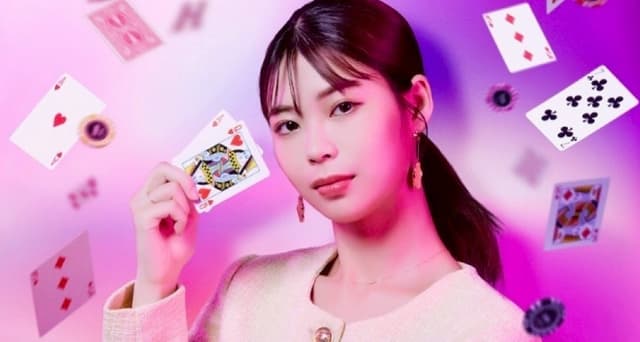
2. Over 30 coaching sessions with well-known players in three years
— What kind of thinking did you do during play when you first started poker?
Ao:
I started poker thinking I had an aptitude for it, but by my third tournament or so I was losing a ton. That's only natural, but I was shocked, because I'd thought I was good. I figured something must be wrong, so I started watching poker videos. At first, though, I was just way too aggressive — I kept thinking, "If I shove, making them fold is the better deal." And I couldn't rest unless I put everything I learned into practice, even a little, so I'd do things like five-bet shove all-in and see if they folded. Haha.
— If you did that to me, I'd want to fold even QQ, haha.
Ao:
Right? If I could make you fold QQ, that'd be a huge win, haha.
— It's true, you're making the most of your image there.
Ao:
Exactly. But when you do that two or three times a day, you're obviously going to get caught. Then I'd think, "Why am I getting caught?" or "Isn't there a better hand selection?" I kept testing those ideas myself and playing in tournaments. But even so, I was still too bad, so I started getting coaching. I'd say about 80 percent of the players I know have taken coaching at least once.
— Really? Over those three years?
Ao:
Yes, I've taken a lot. Souzirou, Misawa, Euro — lots of people. I think the great thing about coaching is that you can ask about the things you're unsure about.
— There are all sorts of coaching formats. Which kind was especially good for you?
Ao:
Well, I especially love Misawa's coaching. I think I've taken it about 30 times.
— Thirty times! That's amazing!
Ao:
I've taken it a ton in three years, haha.
As for how it goes, we often start by talking about the very first hand. What's great about Misawa's coaching is that they teach you the concepts you're missing for a single-street hand. Of course, when you're playing, you think, "This is the right play," and you have a reason for it. So when I explain, "I did this because I thought that," they'll tell me, "That's wrong." Then we look at where it went wrong — for example,
- estimating equity
- your opponent's range
- the streets that follow
- pot calculation
- outs calculation
- implied odds
There are all kinds of things. If, say, the implied odds were wrong, they'd often move into a lecture: "So what are implied odds?" That might be my favorite type of coaching. But I've tried every type — lecture style and practical style both.
— So even from the early days, you thought of losses as your own lack of skill, rather than luck?
Ao:
That's right. I have a pretty strong belief about this: there's no point in arguing about the luck factor. What matters is whether you made the best play at the time. As a beginner, I took the result of every single hand really seriously — like, "I called and lost." But that hand was a mistake, a complete one. Drawing into a hand you weren't expecting, failing to fold when you normally would, getting caught bluffing — I saw all of that as simply my own mistakes.
— With that mindset from the start, it makes sense you'd immediately think, "I should study."
3. Playing "pin" in rock-paper-scissors forever: studying GTO
— Poker study is broadly divided into equilibrium understanding and exploitation. How have you balanced your studies between the two?
Ao:
In that respect, it's overwhelmingly equilibrium understanding. I'm not great at exploitation, and I don't think I'm good at it.
— I see. Why is that?
Ao:
It's hard to explain, but I want to enjoy the game of poker seriously. And I love studying equilibrium. It's not so much that I study to get better — I feel like I study just because I enjoy knowing the equilibrium.
— So you find enjoyment in making "understanding equilibrium" the goal and working at it.
Ao:
Yes. Also, there's a GTO analogy that really stuck with me. GTO is like trying to play rock, paper, scissors with equal frequencies, right? Against that, someone once told me, "Ao is always playing pin." Imagine "pin" as a fourth move.
— What's the win/loss for "pin"?
Ao:
"It beats paper, but loses if it's a tie." If you only ever play it, it's minus EV every time. So the idea is, first learn to play rock, paper, and scissors — and study GTO to do that.
— Right, poker has hand strength, so hands that are clearly minus EV definitely exist.
Ao:
Yes. So I think exploitation is what people who can play rock, paper, scissors at equal frequencies get to do.
— So a big part of why you think GTO matters is to avoid making "pin" plays against any opponent, right?
Ao:
That's right. Well, of course I do exploit when the time comes, haha.
4. Putting all her money on the table in Las Vegas: staying calm under pressure
— Next, I'd like to ask about your mental game. First, how much experience do you have with live cash games overseas?
Ao:
Last year I think I played about 100 hours, mostly 2-5.
— Do you have emotional ups and downs while playing?
Ao:
I do have emotional ups and downs, but when it comes to money, I barely feel them, I think. I guess I can't do the money math, haha. I can understand getting down because "the pot is big," but I've never thought, "Because the amount of money is big."
— I see. Are you the type to tilt?
Ao:
I tilt like crazy, haha.
— Really! When does that happen?
Ao:
Overwhelmingly, I tilt over my own misplays. On the other hand, when I get rivered and lose a pot to a comeback, I don't feel anything. For example, back when I was playing 2-5 in Las Vegas, I lost a huge bomb pot. They kept calling with a draw that had nowhere near the right odds, and then they hit it at the end and came back to take the pot. At that moment, I thought, "This is amazing — they're calling me."
— You could still think that even after getting drawn out on.
Ao:
Exactly. I thought it was amazing, so I put the entire fortune I'd brought to Las Vegas on the table, haha.
— That's incredible, haha.
Ao:
I don't have much attachment to money, and I simply enjoy maximizing the amount of chips, so I absolutely love no-money poker too.
— But there are a lot of people who tilt over drawing out or getting drawn out on, right? How are you able to stay so calm?
Ao:
Well, that's just the kind of game it is — sometimes you draw out, sometimes you get drawn out on. What matters is that you made the best choice on top of that. Also, I genuinely believe in poker as a game, so I think skill shows through, and probability works out as probability. So I don't believe in things like "that guy runs hot."
— Japan has had mahjong around for ages, and it's true that flow and luck get carried into games a lot. I feel like things might change in poker too if studying off the felt spreads more.
Ao:
I agree. I honestly believe "studying is fun," so I want everyone to try it at least once.
— It'd be great if more people thought that way.
Ao:
Actually, that's one of the goals of my influencer activities. I want to make poker as sport-like as possible. I want it to be something with a high level of competition.
— Like a poker version of the M-League?
Ao:
Yes, that's exactly what I want to do. Queen of Poker is aiming for that too. Poker is cool, poker is fair, and it's not gambling — I want to spread that.
5. Studying even on a desert island: the resolve to live by poker
— Could you tell us about your future goals and what you envision in poker?
Ao:
As for my goals, I'd like to win bigger titles and hope to become more well-known.
— So the goal is taking titles themselves, rather than prize money?
Ao:
That's right. The title itself is an honor and a goal. But even if I won one big title, I think I'd keep challenging higher-level tournaments, so I'd probably end up playing poker forever, haha.
— How do you think about work going forward? Is the route to going pro in poker something you'd consider?
Ao:
Yes, I'd like to go pro. But not just as a cash game pro — I want to be a poker professional that includes influencer activities, marketing, and things like that.
— Next, have you learned any life lessons through poker?
Ao:
Hmm, that's tough... Ah, I think I've learned to think in terms of expected value. That comes in handy in business too. But, well, it's more like living by poker — poker has become too central to my life.
— Maybe what you gained through poker is the decision to live your life in the poker world, haha.
Ao:
Maybe so! I never thought meeting poker would make life this fun.
— Honestly, you clearly love poker an incredible amount, haha.
Ao:
That's right, I might be pretty confident about that, haha. I also often say, "If I take one thing to a desert island, it's a deck of cards," haha.
— Amazing, haha. But you'd want an opponent too, right?
Ao:
I might just be doing solo study, haha.
6. A message for everyone
— What words would you give to people who just started poker, or are about to start?
Ao:
First of all... I'd want to say, "Aren't you glad you found poker?" haha.
— That finding it is itself happiness.
Ao:
Yes. And if you're thinking of studying, there's so much you can do these days. You can watch YouTube, use tools like Wizard, and there's also PokerQ'z, of course. If you study with those, I think you'll discover a different kind of fun.
— Finally, could you say a few words to the readers?
Ao:
I have a strong desire to become stronger and better at poker myself, and I'd be happy if everyone enjoyed poker in all kinds of ways. That's why I really dislike betting home games. I really want people to stop gambling in Japan. I want us all to build up poker and cherish it together.
— Exactly — if betting spreads, it invites regulation and leads to the decline of the entire poker world.
Ao:
That's right. I want people to purely enjoy poker as a game. And poker is fun enough a game that you can enjoy it that way. I want to build a culture where winners look cool, and where even if you get drawn out on and lose the pot, you can take it in stride and walk away. I want to be that kind of player myself.