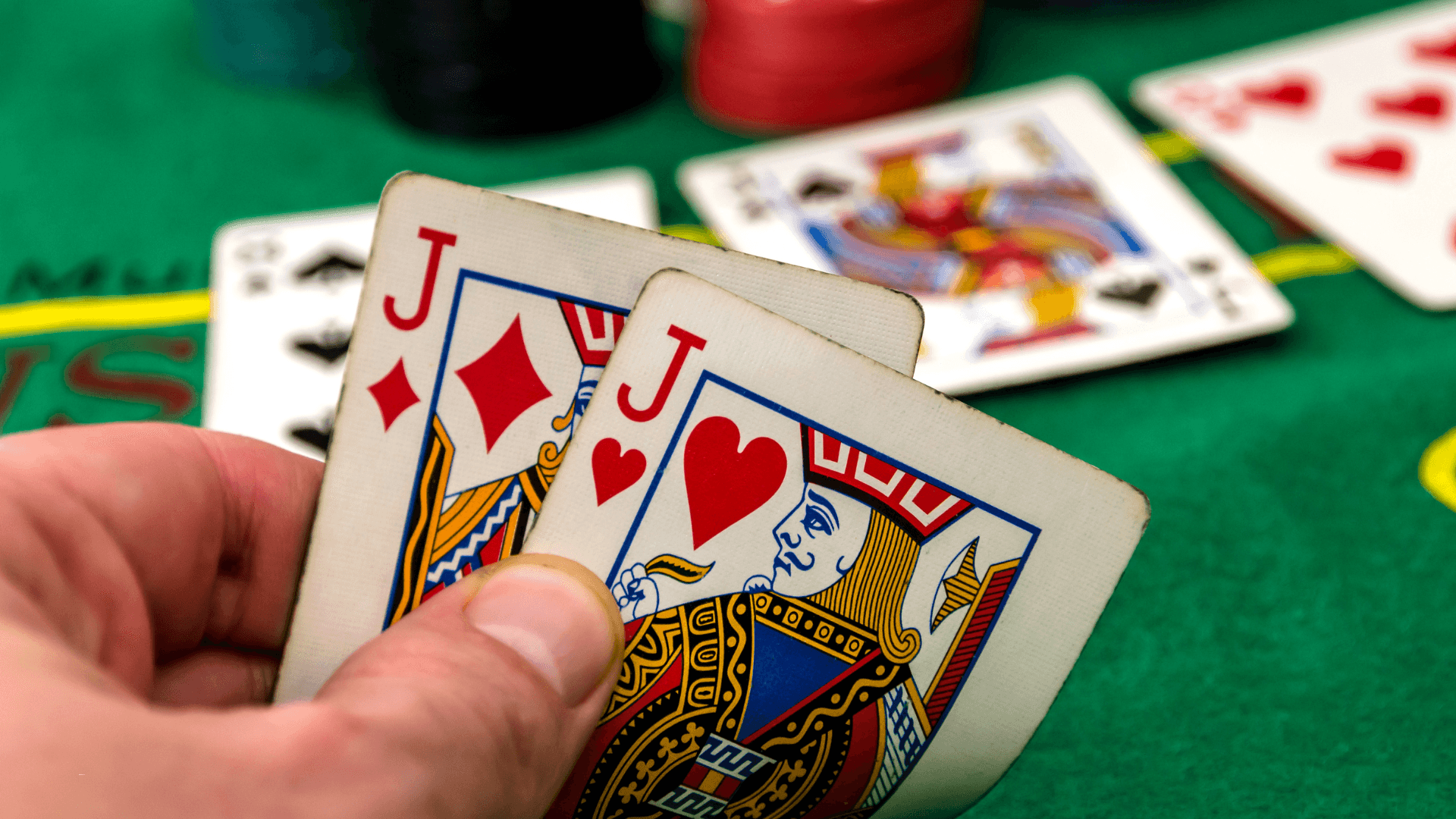

ting is an essential technique for winning at poker. In a nutshell, it's a bet made with a strong hand to get your opponent to call and win chips. Alongside bluffing, it is one of the two main purposes of betting, and your long-term results depend directly on whether you can fire it consistently and at the right size. This article explains value betting from the fundamentals to sizing, spot selection, and common mistakes, all in beginner-friendly terms.
What Is a Value Bet in Poker?
A value bet is a bet you make when you judge your hand to be stronger than your opponent's, designed to get called and grow the pot.
Purpose: get your opponent to call and maximize the pot
Prerequisite: you can read that your hand beats the hands your opponent is willing to call with
It sounds simple — "bet when you have a strong hand" — but the essence of a value bet is extracting chips from your opponent's weaker hands. If you bet with a size or in a spot where your opponent won't call, your strong hand is wasted.
How Is a Value Bet Different from a Bluff?
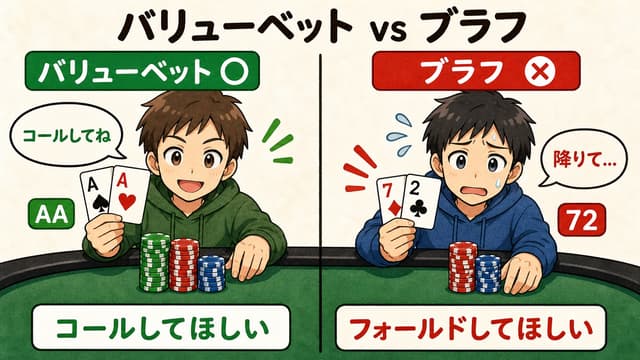
ting is betting, but a value bet and a bluff have exactly opposite goals.
Value bet: you want your opponent to call. Strong hand → grow the pot
: you want your opponent to fold. Weak hand → take the pot
There is also a similar-sounding but very different term: the block bet. It's a small bet you make yourself to limit the action and avoid facing a big bet from your opponent, and it sits somewhere in between value and bluffing.
Simply being aware of whether the bet you're about to make is "value, bluff, or block" dramatically reduces inconsistency in your betting decisions. For guidance on combining value with bluffs, see our article on bluffing.
A Concrete Example of Value Betting
Let's walk through a Texas Hold'em hand where you play A-K (ace-king).
Preflop: you are on the BTN with AK (ace-king) and raise. The BB calls.
K72: you make top pair, top kicker (the best pair of kings, with your ace as the strongest possible kicker). Your opponent's range includes weaker king pairs, pairs of sevens and deuces, and draws, so you bet to get called. → C-bet, opponent calls.
K723: the 3 changes little. Your opponent's range hasn't changed much, so you can keep value betting. → Bet, opponent calls.
K7239: no straight or flush completes, and you still hold top pair. Make one final value bet to maximize the pot.
This sequence is a textbook value-betting line. The key is to keep confirming on every street that your opponent's calling range still contains plenty of hands weaker than yours.
How Do You Decide Your Value Bet Size?
When you have a strong hand, you might be tempted to just shove, but that only gets called by hands stronger than yours — exactly the opposite of growing the pot. The trick is to size your value bets around the edge of your opponent's "maybe I'm actually ahead" boundary.
When your opponent's hand looks strong: keep it around 1/2 to 2/3 pot. They are more likely to call
When your opponent's hand looks weak or marginal: bet 2/3 pot to full pot, giving them a wider calling window
Against a calling station: pot-sized to overbet is fine. If they won't fold, take as much as you can
The opposite mistake is just as common: "my hand is strong, so I'm scared and bet small." You only win the amount you bet, and you end up giving your opponent's draws and weak pairs a cheap price (favorable pot odds) to call. The stronger you are, the thicker you should bet — that's the basic rule.
Tips for Making Value Bets Work
To value bet consistently, keep these four points in mind.
Think about your opponent's calling range: would they call with hands weaker than yours? The more of those hands exist, the thicker you can bet
Evaluate your kicker: even top pair versus top pair becomes a value bet turned loser if your kicker loses. strength is decisive
Adjust sizing to your opponent's style: bet smaller against tight players, larger against loose players
Play in position: from a late position (BTN / CO), you can decide to bet after seeing your opponent check, which is an advantage
Losing to a better kicker is a particularly common beginner mistake. It's a familiar scene: a player gets excited about making a strong pair, keeps betting, and then loses at showdown because the opponent's kicker was stronger. For how the kicker decides winners even when both players hold one pair, see our article on kickers and winning rules.
Typical Value Betting Mistakes to Avoid
Here are the value-betting traps beginners tend to walk into.
Betting small out of fear: if you don't bet thick when you're strong, the pot doesn't grow and you leave expected value on the table
Leaving a calling window even for strong (nut-level) hands: a size that only gets called by hands stronger than yours is not value betting — it's reverse value (a failed thin value)
Betting thick multiway: with three or more players still in, the chance that someone has an unexpectedly strong hand rises. Keep your sizing a little smaller
Getting carried away with "a strong hand" when you hold middle pair: even a pair of kings is likely losing to an opponent's ace when there's an ace on the board. Don't forget nut awareness
Once you build the habit of evaluating a strong hand by "the right spot, the right size, and the right opponent", the accuracy of your value bets goes up a level.
Frequently Asked Questions About Value Betting
Q. When should I start value betting?
A. You can start as soon as you make a strong hand on the flop (top pair or better). If your hand stays strong through the later streets, the basic approach is to keep betting every street.
Q. Should I always bet when my opponent checks?
A. No. When your opponent's range is completely ahead of yours (for example, when you can see a full house), checking back is also an option. The trick is to check each time whether hands weaker than yours remain in your opponent's range.
Q. What should I use as a criterion for betting the river?
A. Judge by whether more than half of the hands your opponent would call with are weaker than yours. If so, bet; if not, check. This is called thin value.
Q. Is it OK to take value with an overbet?
A. Yes. Especially when you hold a hand close to the nuts in a spot where nut-level hands are unlikely to be in your opponent's range (for example, on an ace-high board), an overbet can maximize your value.
Summary
A value bet is a bet with a strong hand that makes money by getting your opponent to call. To win at poker over the long term, you must keep taking value when you're strong — consistently and at the right size.
When strong, bet thick without fear (keep your opponent's calling window wide)
Fine-tune your size based on your opponent's range, style, and position
Don't forget kicker losses and nut awareness
Mixing value and bluffing keeps your opponent unsure which one to worry about
Being able to instantly go from "I made a strong hand" to "how do I extract maximum value" is the first step toward mastering value betting. If you'd like to practice making the right decision hand after hand, try drilling it in with lessons like "Understanding Value and Bluffs" in the poker learning app POKER Q'z.