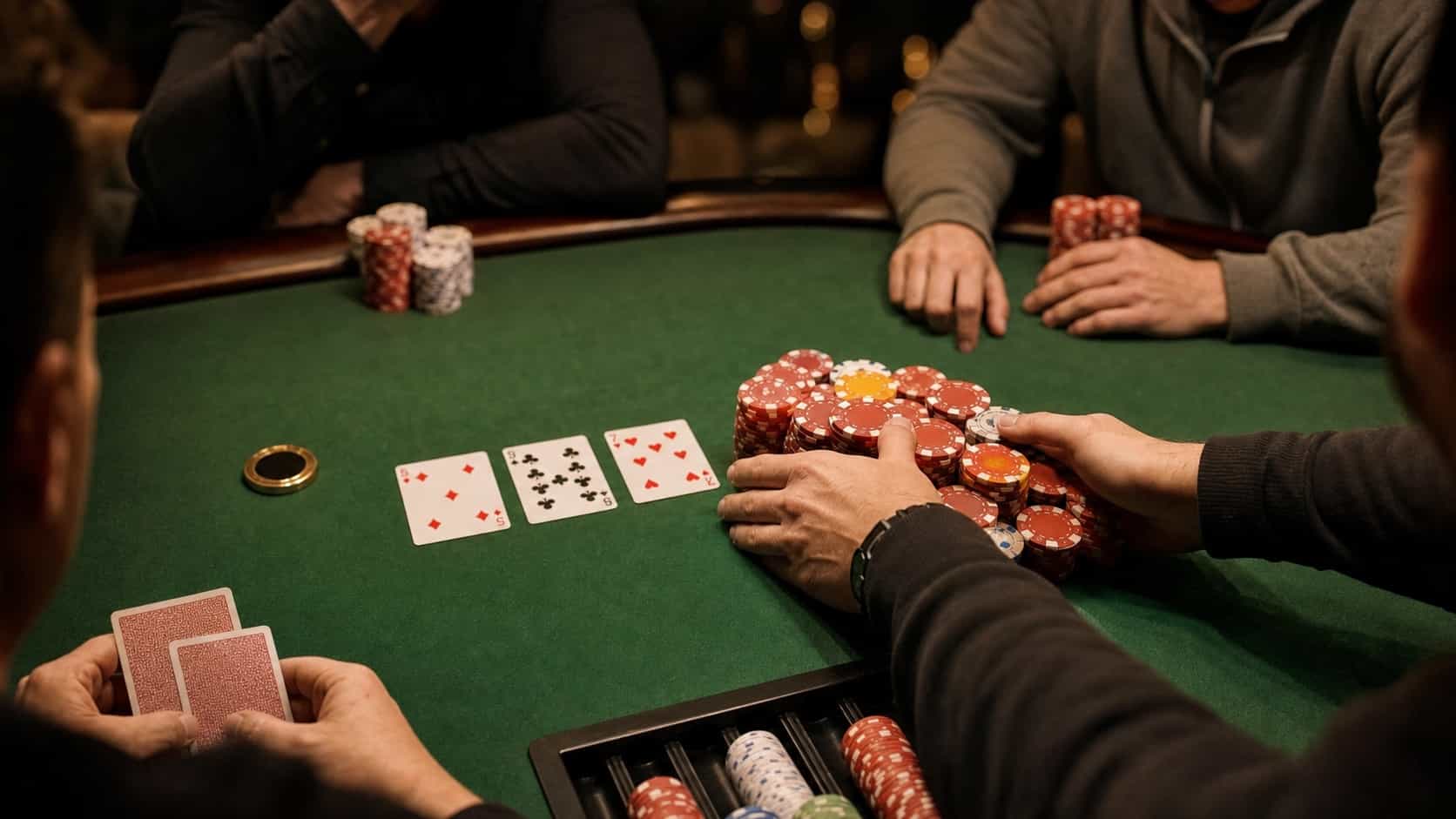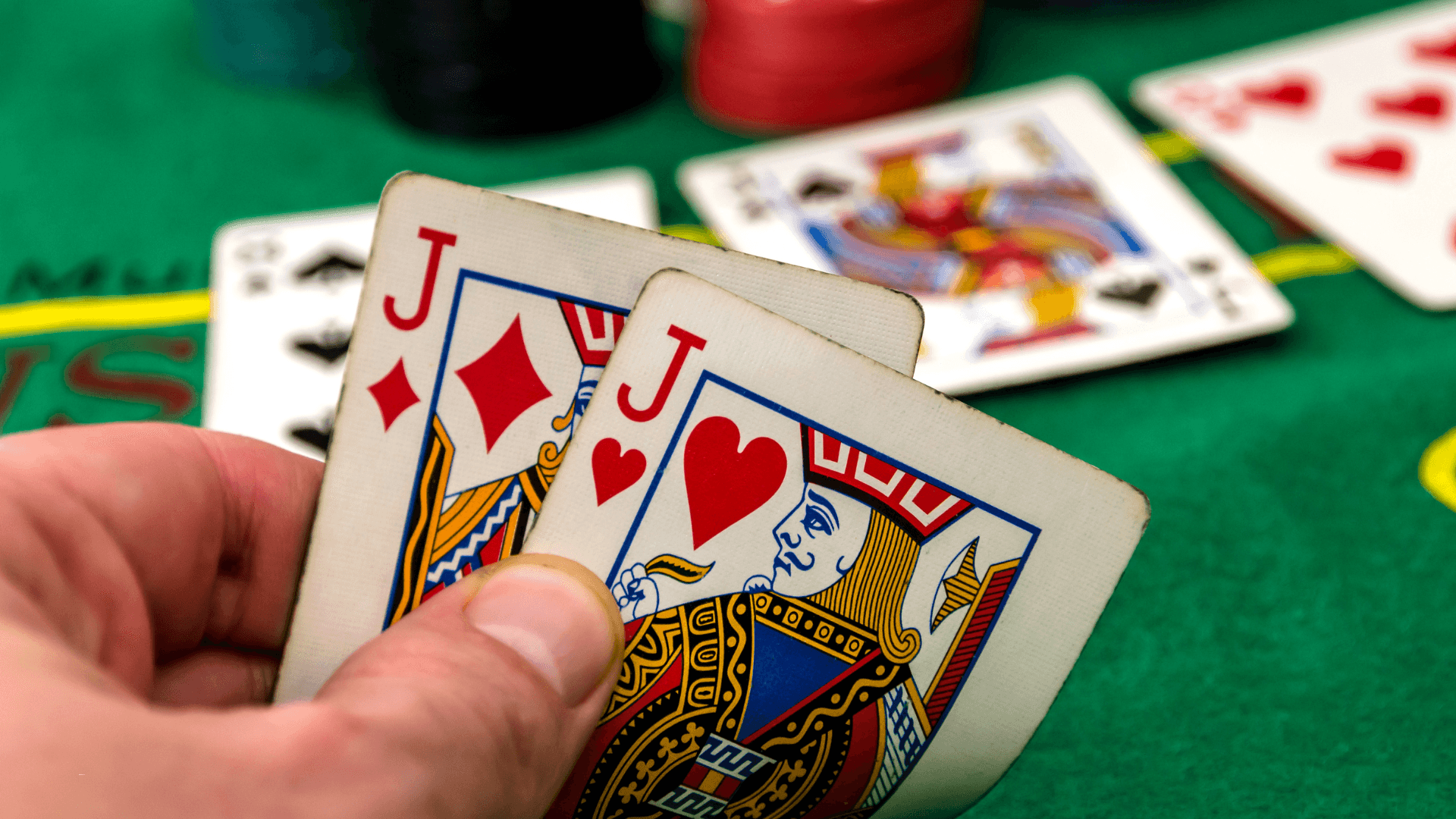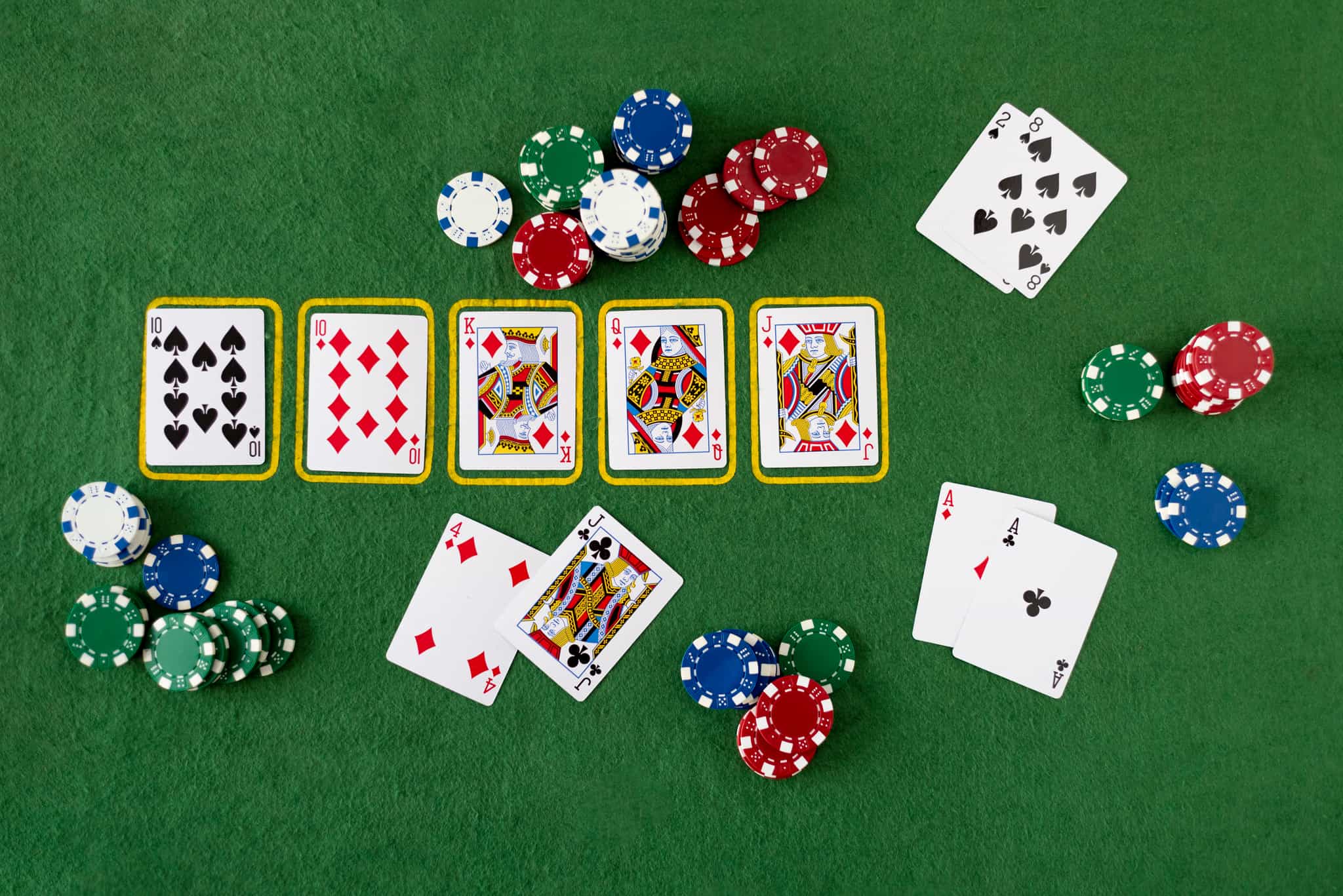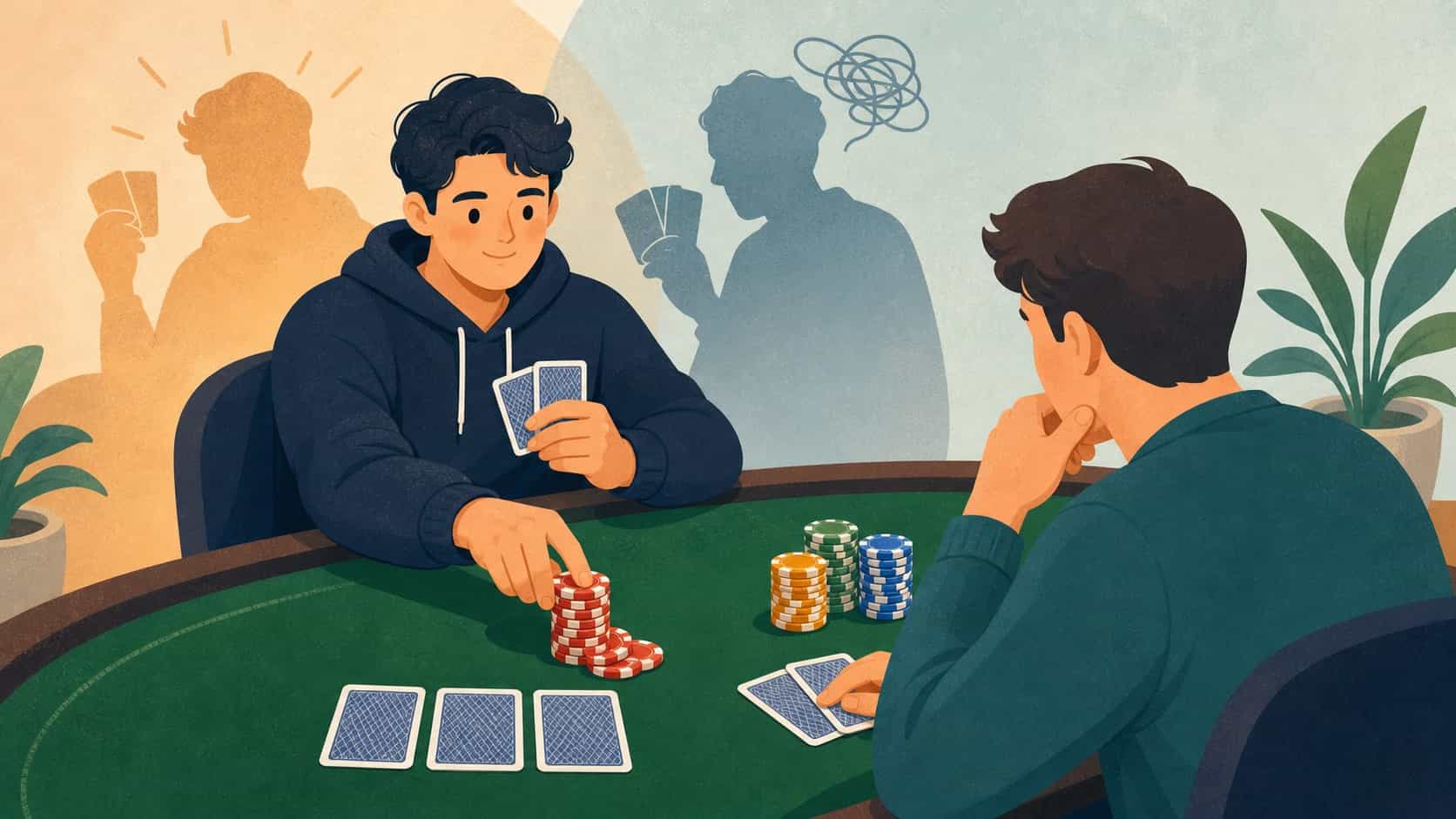

When most people hear “bluff,” they picture empty bluster or a test of nerve, but in modern poker, bluffing is a real strategy. s thrown out on a whim will lose you money in the long run, but once you understand “when and how to use them,” bluffing becomes a major source of income alongside value betting (betting strong hands to get paid). This article walks through the fundamentals of bluffing in order — the types, when to use them, how to calculate the required success rate, and the right ratio of value bets to bluffs — so that even beginners can follow. If you just want a quick definition of the term, check the “Bluff” entry in our glossary. This article goes beyond that to explore how to actually use bluffs in play.
What Is Bluffing in Poker?
A bluff is a bet made with a hand that can’t win (or is unlikely to win), designed to make your opponent fold. A value bet (betting a strong hand to get called and get paid) is the exact opposite in purpose.
: a bet you want your opponent to call
Bluff: a bet you want your opponent to fold
Even though both are “bets,” their meaning is completely different depending on whether you want your opponent to call or fold. If this distinction stays fuzzy, your “why am I betting here?” will waver, so lock it in from the start.
Bluffing is a strategy where bluffing too much loses you money and bluffing too little does too. Bluff too often and your opponents call you down, and your losses pile up. Bluff too rarely and opponents can safely fold everything except their strong hands. The key is your overall hand range — the set of hands you can have in that spot — and mixing in bluffs at the right frequency. Thinking in ranges rather than individual hands is the starting point for profitable bluffing.

What Kinds of Bluffs Are There?
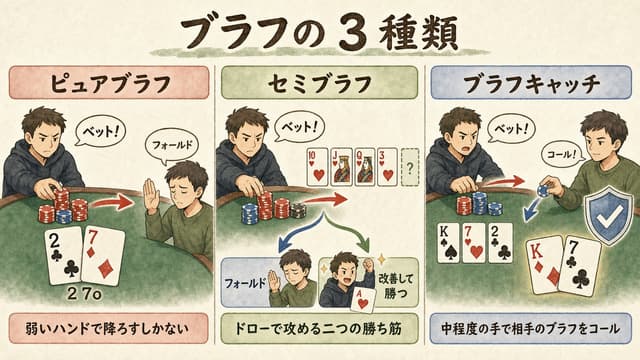
Bluffs fall into three broad types. A simple way to remember them: two attacking bluffs and one defensive counter to bluffs.
pure bluff: bluffing with a hand that has almost no chance of improving. If you don’t get your opponent to fold, there’s no way to win
semi-bluff: a draw (a hand that completes a flush or straight with one more card) — an aggressive bluff with a draw. The ideal is to get a fold, but if you get called, you can still win when the draw completes
bluff-catch: a defensive action where you hold a weaker hand but deliberately call when your opponent looks like they’re bluffing, catching them
Beginners should learn the semi-bluff first. Because your draw acts as insurance, even if you don’t get a fold, you can still improve and win, so the damage stays shallow. A pure bluff is a two-way choice between “they fold or you lose,” so it’s safer to try once you’ve grown comfortable. To learn more about the differences, check out our article on semi-bluffs. You can also practice the split of roles between value and bluffs in a practical format in the lesson “Understanding Value and Bluffs”.
When Are Bluffs Effective?
Whether a bluff works isn’t decided by hand strength alone — it’s decided by the conditions of the spot. Four things matter:
s where your range looks strong: for example, when high cards like an A or K hit the board, if you raised preflop and hold the initiative, opponents see you as someone who “could easily have an A or K.”
Boards where your opponent’s range looks weak: boards that don’t fit the hands your opponent calls with (A-high, K-high, etc.)
Late position (BTN, etc.): from a position like the BTN (button), where you act from behind, you can decide after seeing your opponent’s action, which makes bluffs easier to get through
Opponents who tend to fold: bluffs get through easily against tight opponents and poorly against players who call with anything
Conversely, in multiway pots (three or more players still in the hand) or against opponents who never fold (calling stations), bluffs almost never work. The trick is not to think “my hand is weak, so I give up,” but to build the case for “is there a reason this bluff gets through in this spot?” If you want to repeatedly practice deciding whether to bluff or hold back, the lesson “Should You Bluff?” offers practice close to real play.
To go one level deeper, think about “which side’s range the board favors.” For example, a high-card board like A-K-7 fits the range of the preflop raiser, so bluffs work well, while a low, connected board like 6-5-4 hits the caller’s range and makes bluffs harder to get through. Incidentally, a donk bet — where the player who didn’t raise preflop leads out — is often exactly this kind of bluff/semi-bluff aimed at boards that favor the caller.
How Do You Calculate the Required Bluff Success Rate?
Whether a bluff is profitable in the long run can be judged with a simple calculation.
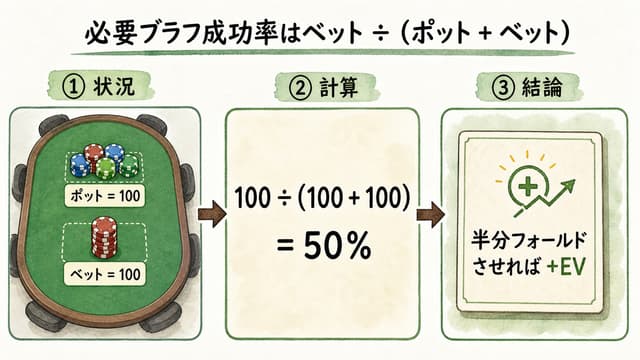
Required success rate = bet amount ÷ (pot + bet amount)
It answers: “What percentage of the time does your opponent need to fold for this bluff to be profitable long-term?” Let’s look at concrete examples.
With a pot of 100, a bet of 50 (half the pot) → 50 ÷ 150 = about 33%. If your opponent folds once in three times, you profit in the long run
With a pot of 100, a bet of 100 (pot-sized) → 100 ÷ 200 = 50%. If they fold half the time, you profit in the long run
With a pot of 100, a bet of 150 (larger than the pot) → 150 ÷ 250 = 60%. They need to fold 60% of the time
In other words, the bigger your bet, the higher the bar for your bluff. A spot where it only needs to work once in three times and a spot where it loses money unless it works 60% of the time are completely different levels of difficulty. When you want to plug in the actual pot and bet size, our odds calculator is handy. And in cases like a semi-bluff, where you can still win with a draw even without a fold, including your equity (probability of winning) in the judgment makes it more accurate. You can see your win rate including the draw at a glance by checking the required success rate with our equity calculator. You can also learn the calculation step by step in the lesson “Learn About Required Bluff Success Rate”.
What Ratio Should You Mix Value Bets and Bluffs In?
Your bets need to mix both value (strong hands) and bluffs (weak hands). If you only bet value, opponents will fold everything except their strongest hands; if you only bluff, opponents will call you down with anything.
Rough guidelines:
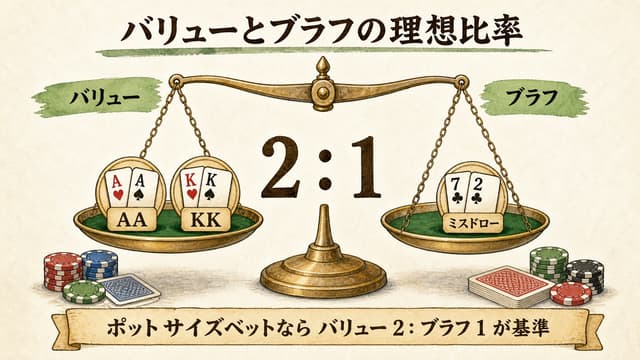
-sized bets → value : bluff ≈ 2 : 1
Larger-than-pot (over)bets → closer to value : bluff ≈ 1 : 1
“2 : 1” means that out of every three bets, two are strong hands and one is a bluff — a ratio that, mixed at around this level, puts your opponent in a position where, against your bets, neither calling nor folding is clearly correct. That’s the shape good players aim for: value bet and bluffs designed as two sides of the same coin.
You don’t need to hit exactly 2 : 1, but remember that a range with “clearly too bluff-heavy” or “no bluffs at all” is easy for opponents to read. The lesson “Think About the Value-to-Bluff Ratio” goes deeper into how the ratio works for each bet size.
What’s also interesting is how this ratio connects to the required success rate behind the scenes. A pot-sized bet demands a 50% required success rate from your opponent, and if you bet with a range of 2 value : 1 bluff, your opponent can’t come out ahead no matter which hand they call or fold with — this kind of fit is the real substance of so-called balance. You don’t need to aim for perfection from the start. Simply pausing for a breath before every value bet and asking “do I have matching bluffs ready?” will dramatically reduce range imbalance.
What Are Classic Examples of Bluffs You Shouldn’t Make?
Here are the bluffing landmine patterns that beginners commonly step on. Put the other way, avoiding these alone will noticeably change your win rate.
Bluffing in multiway pots: with three or more players still in, the chance that at least one person calls jumps dramatically. As a rule, no bluffs with three or more players
Bluffing players who don’t fold: bluffs don’t work against opponents with low fold rates to begin with. Switch to a value-based strategy
Bluffs that don’t fit your range: for example, on a low board like 2-3-4, even if the preflop raiser bets big, it doesn’t look “strong” to the opponent
Desperation bluffs (a last-ditch flail): the thought-stopping bet born from “my hand hasn’t hit by the turn, so I might as well bluff the river since it’s the last street.” You bet without calculating the success rate, so it loses in the long run every time
Double bluffing after your bluff gets called: the pattern where, after being called once, you widen the damage by thinking “if I bet bigger on the next street, they’ll fold”
Bluffing follows one golden rule: calculate your chances before you bet. Bluffs thrown on mood or momentum will almost certainly lead to losses. Conversely, reading and catching the bluff an opponent is using to push you off your hand — a bluff-catch — also rests on the same “calculating your chances.” In particular, desperation bluffs and double bluffs are classic tilt (emotional play). The worse a hand went, the more you should take a deep breath and build the habit of asking yourself whether your next bet has objective justification.
What Concepts Should Players Who Want to Improve Master?
That covers the fundamentals beginners should know first. If you want to improve further, touching on the following three concepts will widen your view at once.
s: the cards you hold reduce the combinations of strong hands your opponent can have — an effect that, for example, means holding one A reduces the combinations where your opponent has AA or AK, lowering the chance they have a strong hand. In other words, a situation where your bluff is more likely to get through.
(minimum defense frequency): “how often you should call so that your opponent’s bluffs don’t get through too often” — the metric that lets you self-check whether you’re folding too much. If you want to check the defense frequency you need with your opponent’s bet size, use our MDF calculator.
GTO-style balance: the idea of structuring value and bluffs in a ratio where you don’t lose no matter how your opponent responds. Bluff frequency and required success rate are easier to grasp when you see them as equations built from this GTO way of thinking
All of these are intermediate-to-advanced material to master fully, but just knowing “such ideas exist” will change how you build your bluffs. You can practice bluff selection with blockers in mind in the lesson “Consider Blockers When Bluffing”.
Frequently Asked Questions About Bluffing
Q. Can beginners bluff?
A. Yes, you can. But starting with semi-bluffs is the safe route. If you bet with a drawing hand, you still have a chance to improve and win even if you don’t get a fold. With the double chance of “fold or win,” failure stays cheap.
Q. Can you spot a bluff from facial expressions or gestures?
A. At a professional level, tells (behavioral quirks) are one piece of evidence, but at the beginner to intermediate stage, judging by the spot, bet size, and opponent’s style is far more accurate. Treat reading expressions as at most a final adjustment.
Q. Do bluffs get through more easily online or live?
A. In general, live games are said to have more “players who don’t fold.” is also higher, so the standard play in live games is to keep bluff frequency modest.
Q. Where’s the line between semi-bluff and pure bluff?
A. Judge by the strength of the draw (improvement equity). If you have win potential around the level of an open-ended straight draw or a flush draw, it’s clearly a semi-bluff; at gutshot level (only one card fills the gap), you can treat it as leaning toward a pure bluff. When in doubt, check your win rate after improving with the equity calculator.
Q. How should you decide bluff frequency?
A. The basic approach is to work backwards from your bet size. For a pot-sized bet, aim for “value 2 : bluff 1”; for overbets, raise the bluff ratio. When you decide frequency from size and required success rate, you get a consistent strategy instead of relying on feel.
Summary
Bluffing in poker isn’t bluster — it’s a real strategy. with these three things in mind:
Use the right type: beginners should start with semi-bluffs.
Choose the right spot: boards where your range looks strong, late position (BTN), situations where your opponent is likely to fold
Do the math: “what percentage does this bet need to get through to be profitable?” — build the habit of calculating it every time
“Calculate your chances before you bet” — once this line becomes a habit, bluffs will reliably become a source of income for you. Start by getting comfortable with the numbers using the odds calculator or equity calculator.
If you want to drill the decisions for specific scenarios through repetition, the poker learning app “POKER Q'z” offers lessons such as “Understanding Value and Bluffs”, “Should You Bluff?”, “Learn About Required Bluff Success Rate” to help you internalize it in a form close to real play.