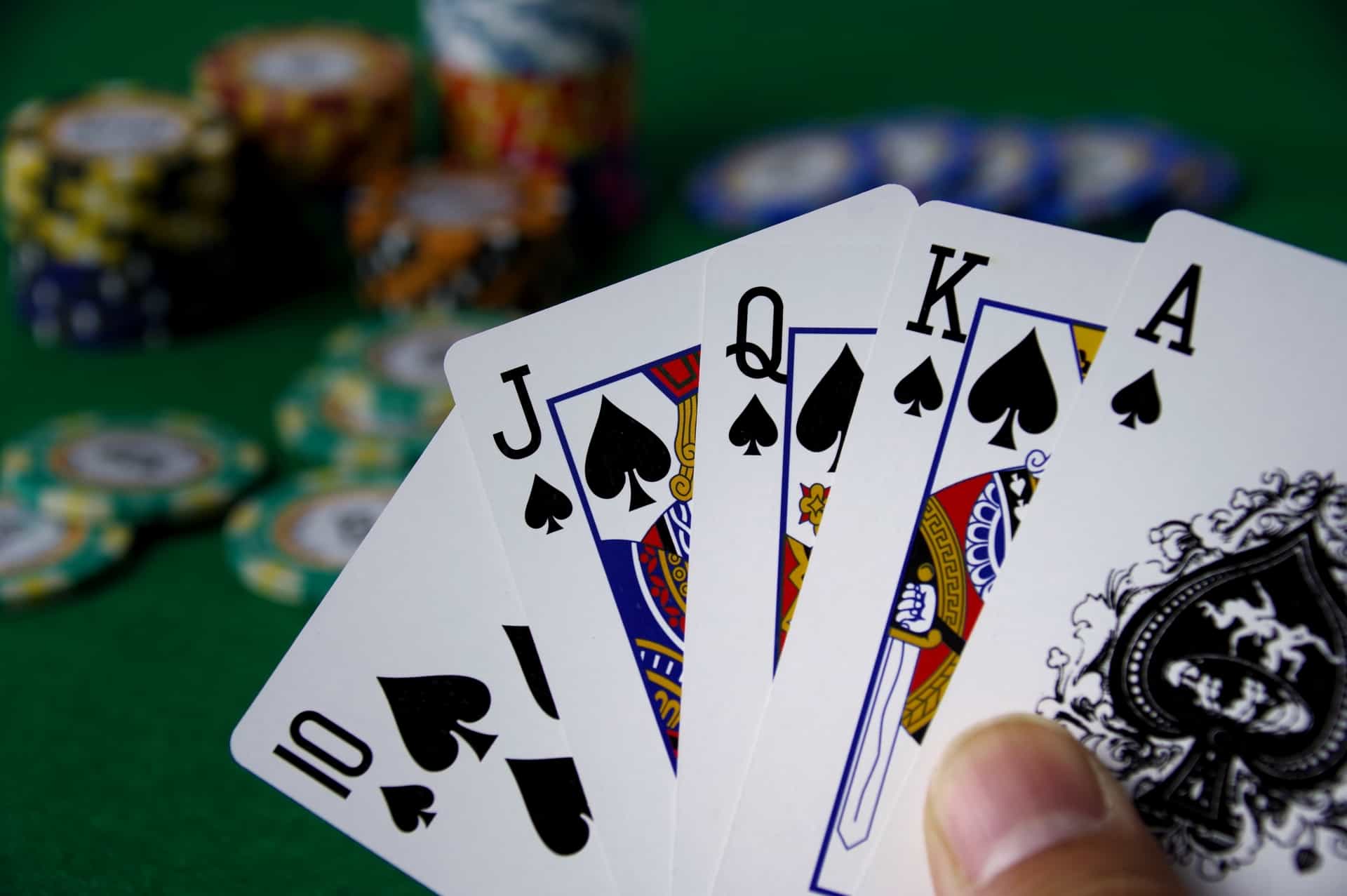

The first decision you make in poker is whether to play or fold the two cards you're dealt — your starting hand. Get this wrong, and no amount of good play afterward can make up for it. This article explains, for beginners, what a starting hand is, the 169 possible hands, how their strength compares, and why the same hand can change your decision depending on position. For short definitions of terms, check the starting hand page in the glossary.
What Is a Starting Hand?
A starting hand is the two hole cards dealt to each player preflop (the first betting round). In Texas Hold'em, you combine these two cards with the community cards to make your hand.
Some combinations are strong, like AA (a pair of aces), while others, like 72, are considered among the hardest to win with. Players who win at poker over the long run have a clear standard for which two cards to play and which two to throw away. Conversely, this first step is exactly what beginners should improve first.
Playing only strong hands is called "playing tight," and it's widely recommended as the fastest route for beginners to start winning. Narrowing the hands you play reduces how often you get dragged into the pot with hands that have little chance of winning, which also means fewer difficult decisions after the flop. On the other hand, a "loose" style of playing almost any hand is hard even for advanced players to manage, so it isn't recommended for beginners.
How Many Starting Hands Are There in Total?
There are 1,326 ways to choose 2 cards from 52, but when suit differences are grouped strategically, they come down to effectively 169 hands. They fall into three types.
s (13): two cards of the same rank, like AA or 88. There are 13 of them, from AA to 22.
ed (78): two cards of the same suit, like AK. They're slightly stronger because a flush is possible. Written with an "s," like AKs.
(78): two cards of different suits, like AK. They're weaker than suited hands because a flush is harder to make, and written with an "o," like AKo.
13 + 78 + 78 = 169. A chart of these 169 hands laid out in a grid is a hand range chart, letting you see at a glance which hands you should play.
These three types each have a completely different character in play. Here's a quick overview.
Pocket pairs: their strength is having a pair already made when dealt. Smaller pairs in particular, like 22 through 88, aim for "set mining" — hoping the third card falls on the flop to make a set (three of a kind). A set can win big against an opponent's top pair, so seeing the flop is worth it when you can join cheaply. And if the set doesn't come, folding cleanly matters — that contrast is important.
Suited: big suited hands like AK are strong on their own, while suited connectors like 76 are attractive for their potential to make both straights and flushes. They may look weak alone, but they gain value from their explosive upside when they hit and from being hard for opponents to read.
Offsuit: because flushes are harder to make, they're a step weaker than suited hands of the same cards. Offsuit hands like AT in particular need attention for "domination," which we'll cover later.
How Strong Are Starting Hands? A Rough Guide
Exact strength changes with position and opponents, but here's a rough order of strength that's useful for beginners to learn first.
| Rank | Example hands | Characteristics |
|---|---|---|
| Top tier | AA KK QQ AK | Can play aggressively from any position |
| Upper tier | JJ TT AQ AK class | Generally strong, but be cautious depending on the situation |
| Middle tier | Mid-sized pairs, suited broadway | Easier to play from later positions |
| Speculative | Suited connectors like 76 | See cheaply and aim to win big. Best from late positions |
| Weakest | Unconnected low cards like 72 | Generally don't play |
This is only a rough guide — the range chart tool is the reliable way to check exact ranges. Start with the sense that "big pairs and big suited hands are strong" and "two unconnected low cards are weak." Strength isn't fixed; it rises and falls with the number of players at the table and your opponents' tendencies. Treat the table as a starting point and keep updating your feel in real play — that's the fastest path to improvement.
What's the Difference Between Suited and Offsuit?
Even with the same AK, suited (AKs) and offsuit (AKo) win at slightly different rates. The reason is simple: a suited hand has flush potential.
However, the probability of actually completing a flush isn't that high, so suited adds only "a few percent" of strength. Still, those few percent accumulate and decide wins and losses over the long run. s like 76 in particular can chase both flushes and straights, so even though they look weak alone, their value rises in late position.
You can check the actual win rate between two hands with the equity calculator. Comparing AKs and AKo side by side lets you feel the value of being suited.
Another idea that's easy to overlook when choosing hands is domination. For example, AT (ATo) feels strong because "it has an ace," but if your opponent holds AK or AQ, you share the same ace while losing on the kicker (the remaining card). Even if an ace hits the board and you make top pair, your opponent has a stronger top pair — this "kicker loss" is a common trap with offsuit broadway (face-card combinations).
That's why hands like AT or KJ should be understood as "playable, but not always strong". Build your play around big suited hands and big pairs that are hard to dominate, and save offsuit broadway for "good position and opponents who don't look strong."
Why Does Position Change Hand Strength?
The most important factor in starting-hand selection, and the one beginners most often overlook, is position. Even the same hand changes whether you should play it, depending on where you sit.
Take AT (ATo), for example.
UTG (the seat that acts first): many players still remain behind you, and they're more likely to hold stronger hands. ing ATo is the safe play.
BTN (the button — the most favorable seat): only SB and BB remain behind you. You've already passed most opponents, so the same ATo is good enough to open (make the first raise).
Now consider a smaller pocket pair, 88. Its main value lies in set mining. From a late seat like BTN, you can raise yourself, take the initiative, and win big if you flop a set. From UTG, on the other hand, you'll more often get 3-bet by someone behind you, making the set hunt unprofitable, so you need to handle it more cautiously. The same 88 plays differently depending on "how many players are behind you."
This is the essence of position: the relative strength of a hand changes with how many players remain behind you. Remember: be selective in UTG, and the closer you get to BTN, the wider you can play. To see how much the UTG and BTN ranges differ, compare the UTG open and BTN open range charts.
What Opening Standard Should Beginners Learn First?
You don't need to memorize all 169 hands at once. Start by learning a rough standard for hands you can confidently open. As a starting point, keep the following in mind.
Big pairs (AA through mid-sized pairs): play by default
Big suited hands with an ace or king (AK, AQ, etc.): play actively
combinations (KQ, QJ, etc.): play when position is good
Unconnected low cards (94, etc.): fold by default
It also helps to know the typical "overplaying" mistakes beginners make.
Two weak cards that are only suited: playing 93 just because "it's suited." es complete less often than you'd think, and these hands mostly lose half-heartedly.
A big card with a weak kicker: K6 or A4, for example. Even when they hit, they easily lose on the kicker to domination as described above — hands where you think you're winning but you're actually losing.
Only one broadway card: hands like Q7. Even with one face card, if the other card is weak, it's hard to win in the end.
"The hands you feel like playing are often the ones you should fold" — that's the difficulty of starting-hand selection, and also the key to improving. Start by narrowing the hands you play, then widen them gradually as you get comfortable.
To build this feel systematically, the lesson "Know the Standard for Hands You Can Open" is ideal. If you want to go deeper by position, "Know the UTG / HJ Ranges" and "Know the CO / BTN Ranges" walk you through the differences seat by seat.
How Can I Actually Check with Range Charts and Tools?
For understanding starting hands, learning while looking at actual range charts is overwhelmingly faster than reading text alone. At PQ'z, you can check hands-on with the following tools.
Range chart (spot list): check the "hands you should play" in a grid, by position and situation.
UTG open and BTN open: directly compare how much the range widens when the same tool is used from different seats.
Equity calculator: compare the win rates of any two hands you're curious about.
If you want to dig deeper into the "types" of ranges themselves, the lesson "Know the Types of Ranges" and the related blog's range guide will round out your understanding.
Frequently Asked Questions About Starting Hands
Q. What is the strongest starting hand?
A. AA (a pocket pair of aces, commonly called pocket aces). It beats every hand in equity at preflop. Next come KK, QQ, and AK.
Q. Are suited hands really stronger than offsuit?
A. Yes, but the difference is small. Suited hands have the edge because of the flush potential, but the added strength is only a few percent. A sense of "prefer suited when the combination is the same" is enough.
Q. Do I need to memorize all 169 hands?
A. No. Start with the big picture — "big pairs and big suited hands are strong," "two unconnected low cards are weak" — plus a standard for hands you can open. the details in a range chart whenever you need to.
Q. Is AK (AKo) a strong hand?
A. It's in the very strong class. It's slightly behind pocket pairs, but it's ahead of most other hands and can be played aggressively from any position. Suited AK (AKs) adds flush potential and is even stronger.
Q. How should I handle small pocket pairs?
A. Your main goal is set mining. If the third card falls on the flop and you make a set, it's extremely strong, so it's worth seeing the flop when you can join cheaply. If the set doesn't come, don't chase — fold. That contrast is important.
Q. Why do I play the same hand sometimes and fold it other times?
A. Because your position (where you sit) is different. Be selective in early positions like UTG, and play wider from favorable positions like BTN. The relative strength of a hand changes with how many players remain behind you.
Summary
A starting hand is the most important decision you make first in poker. Here are the key points.
Effectively 169 hands: three types — 13 pocket pairs, 78 suited, 78 offsuit
The big picture of strength: big pairs and big suited hands are strong; unconnected low cards are weak
Changes with position: the same hand can be folded in UTG and played on BTN
Starting-hand selection looks like a lot to learn, but it's really the accumulation of a simple habit: "choose strong hands and discard weak ones." First build your standard with the lesson "Know the Standard for Hands You Can Open", check your answers with the range chart tool, and gradually widen your own "playable hands."