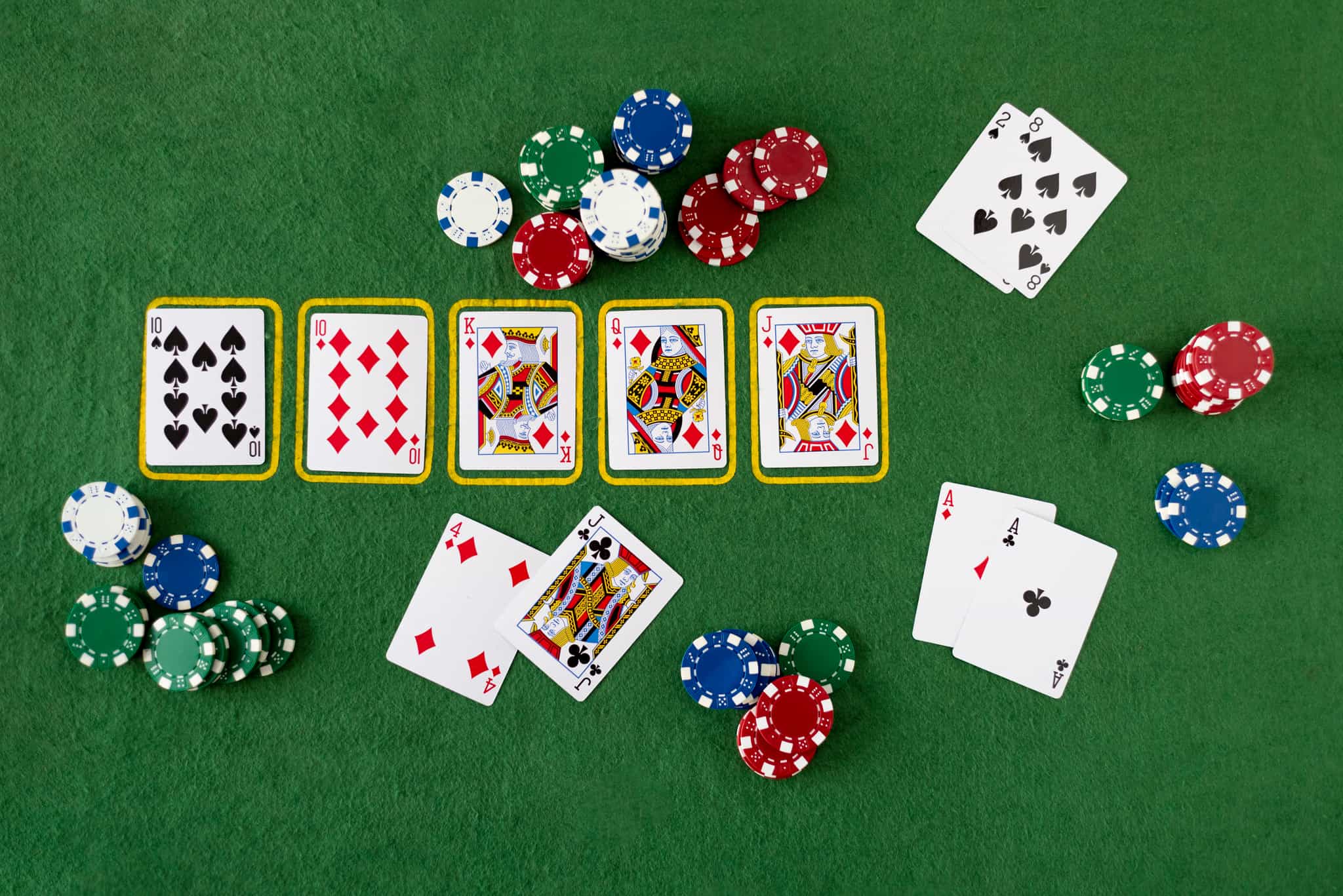

In poker, when you hear the term "check-raise," most people picture something like "a trap-like move where you check first, then raise when your opponent bets." And that's basically right: the check-raise is a powerful weapon for the player at a positional disadvantage (OOP) to seize back the initiative. However, used in the wrong spot, it can also be a move that quickly tightens the noose around your own neck. Used correctly, it's a fundamental skill that works at any stake, but copying it without understanding the principle usually backfires. This article explains the check-raise in beginner-friendly terms: its definition, why it's strong, balancing value and bluffs, effective boards and hand examples, the trap of overdoing it, and how to respond when you're on the receiving end. You can also find a quick rundown of the term in the glossary entry for check-raise.
What Is a Check-Raise?
A check-raise is an action in which you check on your turn, and if your opponent bets, you respond with a raise. It refers to a two-move sequence: "check → opponent bets → raise."
Here's an example of how it plays out.
BTN raises preflop, BB calls
The flop comes, and BB checks first
BTN makes a c-bet
BB raises that bet ← that's a check-raise
The player at a positional disadvantage (OOP) has a weakness: leading out into the opponent just becomes a donk bet, which is vulnerable to a raise. The check-raise flips this weakness around by not betting first, but letting the opponent bet and then raising.
It's easy to confuse, but a check-raise only exists when the two actions—check and raise—come together. At the moment you check, nothing has happened yet; the option to raise only appears once your opponent bets. In other words, "your opponent betting" is a precondition—if they check back (i.e., there's no bet), a check-raise never occurs. This passive "waiting for the opponent's action" nature is what creates both the strengths and weaknesses discussed later.
Why Is a Check-Raise Strong?
The check-raise is strong because it's one of the few ways for the player at a positional disadvantage (OOP) to seize back the initiative from the player at a positional advantage (IP).
In poker, the IP player, who gets to act later, has an informational advantage. OOP is always in the position of "being forced to act before the opponent," and if they keep getting c-bet, they tend to become passive. Mixing in check-raises creates the following effects.
You can put pressure back on the opponent's bets: by making the opponent aware that betting will get raised, you discourage loose, thin c-bets
You can balloon the pot in one shot: when you have a strong hand, raising over the opponent's bet can draw out a larger amount than betting yourself
You can hide OOP's weakness: by showing that check doesn't necessarily mean weak, you protect your entire checking range
Another strength that's often overlooked is that the check-raise "can represent a wide range of hands." s you make yourself naturally skew toward "hands with a reason to bet." A check-raise, by contrast, passes through a check first, letting you hide everything from monster hands to strong draws behind the same action. From the opponent's perspective, the simple read "checked, so weak" no longer works, which protects your checks overall.
In other words, once you understand the check-raise not as a single action but as "the stance OOP takes to fight back against IP," the essence of its power becomes clear. The more frequently your opponent c-bets, the more effectively this counter lands.
How Should You Balance Value and Bluffs?
The key to making the check-raise work is mixing value hands (strong hands) and bluffs (weak hands) in the right proportions. If you only check-raise for value, your opponent reads "raise = strong" and folds weak hands too easily. Even when you hold a strong hand, if your opponent folds, you can't extract much money. Conversely, if you bluff too much, you'll get picked off by calls and re-raises, and the losses mount. By avoiding both extremes and weaving value and bluffs together, your opponent can no longer read what your raises contain.
Value: hands that win when called, such as sets, two pair, and strong top pair. You want to grow the pot
: centered around strong draws (flush draws, open-ended straight draws, etc.). The ideal is a "semi-bluff"—it's fine if they fold, and you still have outs if called
The reason to choose semi-bluffs for bluffing is that they carry insurance (outs) when the bluff doesn't get through. Rather than check-raising with pure air (no pair, no draw), bluffing with a hand like a flush draw—one that can still overtake your opponent later even if called—keeps the damage small when it fails. As with value betting, you should also be able to explain why you're betting this amount with this hand.
The value-to-bluff ratio changes with the situation, but the design philosophy is shared: "build around value, then add a certain number of bluffs to back it up." Roughly speaking, the more hands you check-raise for value, the more bluffs you can add to match. If you force extra bluffs on a board where you have little value, the strategy falls apart, because there are no hands that win when called. Lessons "Building a Check-Raise Range 1" and "Building a Check-Raise Range 2" walk you through practicing this thinking in actual spots.
Which Boards Is the Check-Raise Effective On?
The check-raise works especially well on boards where OOP's range is likely to be at an advantage. The key question is: "Does this board hit your range more than the opponent's (IP's)?"
Low, connected boards: e.g., 765. s and small pairs in BB's calling range connect easily, while IP's raising range rarely hits
Paired boards: e.g., 883. Whether trips are out there is hard to read, so check-raise bluffs get through more easily
Monotone and two-tone boards: on boards involving flush draws, strong draws can serve as bluff material, making it easy to stock check-raise ammunition
Conversely, on boards full of high cards like AKQ, IP's preflop raising range (AK, AQ, KQ, etc.) connects hard, so a check-raise from OOP rarely gets through. Attacking where the opponent's range is stronger just invites calls and re-raises. On these boards, accepting check-calls and folds instead of forcing the issue keeps the damage down.
The decision framework is always the same: "Which range does this board favor—the opponent's or yours?" Simply choosing boards where your range is favored dramatically changes your check-raise success rate.
Which Hands Should You Check-Raise?
For concrete hand selection, think along the two axes discussed above: value and bluff. Using a dry board like A72 as an example, here's how it breaks down.
Value candidates: 77 (set), A7 (two pair), etc. You're going for value from the opponent's top pair
Bluff candidates: hands with backdoor potential or hands that can improve on a later street. On dry boards, the trick is not to bluff too much
s you don't check-raise: middle pairs and hands with showdown value are better check-called to protect their value
On a draw-heavy board like 982, you can actively use flush draws and open-ended straight draws as bluff material. Conversely, on a dry board like A72, draws are scarce to begin with, so bluff ammunition is thin and it's natural to check-raise less. It's also useful to remember the relationship: "the more draws on the board, the more you can bluff."
When you're unsure about hand selection, asking yourself "Can this hand win if called, or am I betting to fold it out?" each time will keep you on track. Hands you're happy to see called are value; hands you want folded are bluffs; and hands that are neither belong in your check-calling range. Simply being aware of this three-way split cuts down wasted check-raises. ing which range your opponent is betting with via the range table tool sharpens your decisions even further.
What's the Danger of Over-Check-Raising?
The check-raise is powerful, but pushing the frequency too high quickly turns it into a weakness. Common mistakes include the following.
Getting picked off by too many bluffs: spamming check-raises with weak hands lets the opponent respond with calls/re-raises, and you lose big pots
Getting read and avoided: if you check-raise every time, the opponent learns "bet and you'll get raised," so they stop betting thin for value—meaning there's less to extract in the first place
Getting dragged into big pots out of position: a check-raise is an action that grows the pot. Fighting a large pot without position makes the price of a misjudgment bigger too
A pattern beginners especially fall into is "not wanting to look weak by checking, so check-raising every strong hand." If you route all your strong hands into check-raises, the hands left in your check-calling range get weaker, and in the end your checks become easy to read. It's also important to deliberately keep some strong hands in your check-calling range to preserve balance.
A check-raise is ultimately a single strike that lands in the moments that matter. Keep it at a frequency backed by value, and choose semi-bluffs as the centerpiece of your bluffs. This discipline protects your long-term expected value. Build the habit of pausing before you strike and asking, "Does my range really have the edge on this board?"
How Should You Respond to a Check-Raise?
Now let's cover the other side: how to respond when you're the one who c-bet and the opponent check-raises you. The baseline is to assume that "the opponent's check-raising range is often weighted toward value."
Strong hands (overpairs, sets or better): call, or re-raise depending on the opponent's range. There's no need to fold easily
Middle-strength hands like top pair: depends on the board and the opponent's tendencies. on draw-heavy boards, and be cautious on dry ones
or weak draws: folding is the baseline. Bluffing back over a check-raise is for advanced players who have a read on the opponent's frequencies
This is where adjusting your c-bet size in advance helps. On boards where you're wary of a check-raise, one defensive approach is to deliberately bet smaller so that getting raised hurts less. If the opponent check-raises frequently, call more often; if they rarely do, treat it as genuine value and fold respectfully. Observing each opponent's frequencies determines the quality of your response.
If you want to bluff re-raise (re-raise over a check-raise), checking the equity you need in advance with the equity calculator is reassuring. Knowing in numbers how often your hand wins against the opponent's range lets you make consistent decisions that don't rely on feel alone.
Frequently Asked Questions About the Check-Raise
Q. What's the difference between a check-raise and a donk bet?
A. Both are actions by the OOP player, but a donk bet is "betting yourself first without letting the opponent bet," while a check-raise is "checking once, letting the opponent bet, then raising." Because it draws an extra bet out of the opponent, the check-raise is considered the stronger response.
Q. Can beginners use the check-raise too?
A. Yes, but it's safest to start with clear value hands (sets and two pair). Bluff check-raises are hard to manage in terms of frequency, so mix them in gradually once you're comfortable.
Q. How big should a check-raise be?
A. 2.5–3.5x the opponent's bet is one benchmark, but it varies with the board and ranges. On draw-heavy boards, the standard play is to raise bigger to cut into the opponent's equity.
Q. Does check-raising give away your hand?
A. It does if you only do it for value. That's exactly why mixing value and bluffs to protect your range matters—it's the condition that keeps the check-raise an "unreadable weapon."
Q. Can you check-raise preflop too?
A. Checking preflop is only possible in limited spots like the BB, so preflop check-raises are limited. The check-raise takes center stage from the flop onward (postflop), when checking becomes an option. This article also assumes a postflop context.
Summary
A check-raise is an action that checks, then raises over the opponent's bet—the way OOP takes the initiative back from IP.
The essence of its strength: it flips the weakness of being out of position and suppresses the opponent's careless bets
The core of the design: build around value, mix in a certain number of semi-bluffs, and protect the range
Watch out for overdoing it: push the frequency too high and you get read, dragged into big pots out of position
On the receiving end: assume the opponent's range skews toward value and respond carefully
When you're just learning, strong hands alone are enough for the check-raise. As you get used to it, add semi-bluffs little by little, and aim for a range that's ultimately balanced between value and bluffs. Starting with clear value hands on effective boards and gradually mixing in bluffs is the fastest path to improvement. You can also practice real range building hands-on in the lesson "Building a Check-Raise Range 1".